
Mobile Ordering Is a Link, Not an Install
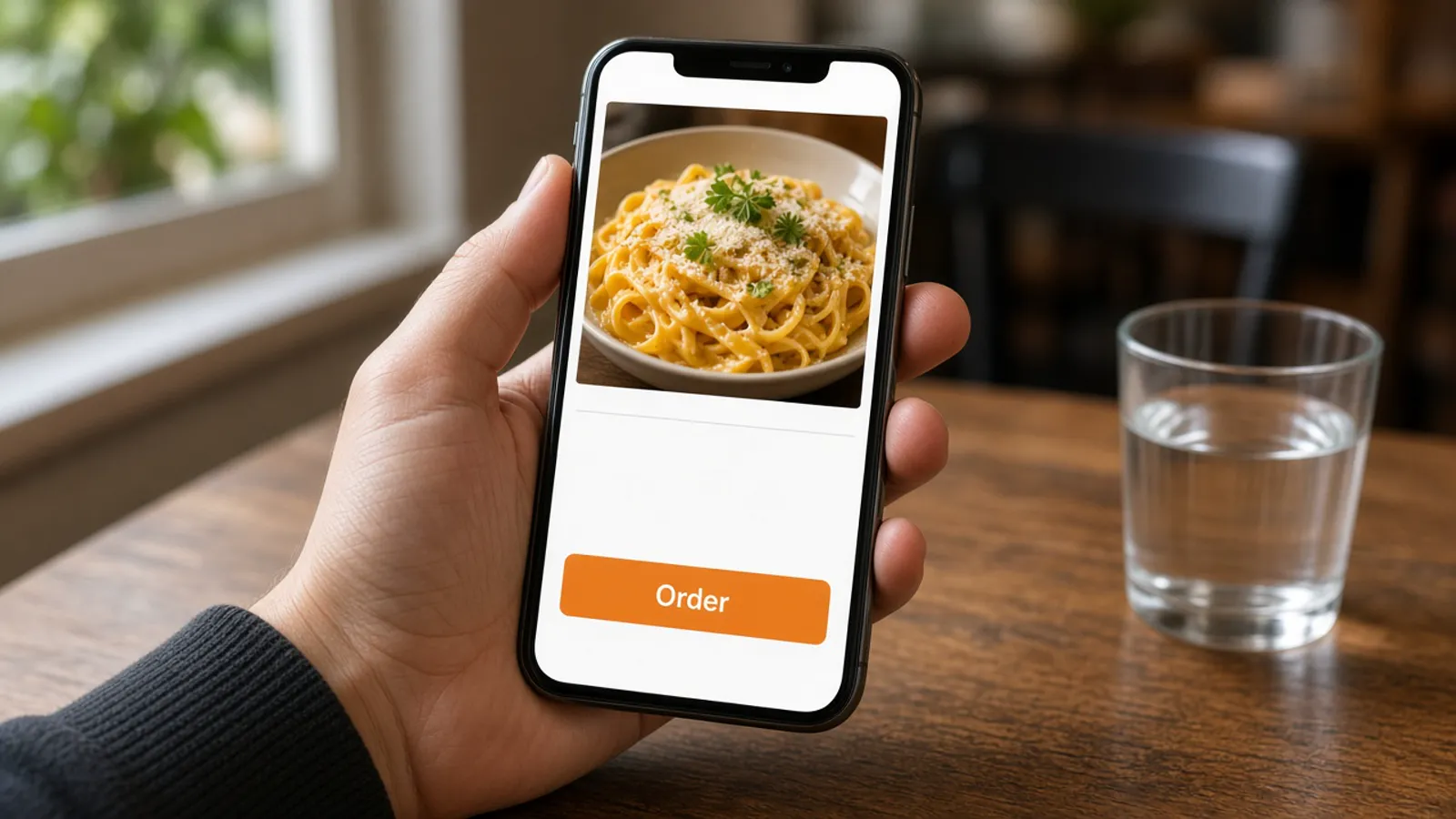
Owners who search for mobile ordering are usually being sold an app. The guest in front of your shop is not waiting on a download. They are on a Google listing, an Instagram post, or a text. Mobile ordering here is a phone-friendly site they can finish from that tap.
Speed, tap to call, and headings are restaurant mobile website. The branded door and the printed ticket are order food online. A later iOS icon is food order application. Stay here for the decision those pages assume: one link, no install.
Open It From Google, Instagram, or a Text
Use one URL everywhere. If Google, Instagram, and a text open three checkouts, the guest will learn whichever brand answered first. The URL should be your storefront.
On Google, Standard includes order links on your Business Profile. The tap should leave the listing and land on your menu. Confirm it from a phone that is not logged into the editor. A button that still opens a marketplace is mobile ordering in name and someone else's app in fact. How the listing button works is Google ordering.
On Instagram, paste that same URL in the bio and on the post that shows today's plate. MicroSky Food does not connect to Instagram and does not take the order inside that app. The photo can live there. The checkout should not.
A Text Should Carry the Same Address
On Growth Plus, an SMS can go to guests who already ordered and chose text updates. Put the storefront link in the message. It is not a unique tracked link per person. Standard and Growth do not include SMS campaigns. On those plans, say the link out loud, print it on the receipt, or hand a card. Do not text a list you bought.
Growth, after 3 months on Standard, can push the branded iOS app. That push is not a text, and it misses anyone who never installed the app. The website link still works. Putting that link in someone's hand, in the neighborhood, is how to market your restaurant locally.
The Phone Page Has to Finish the Meal
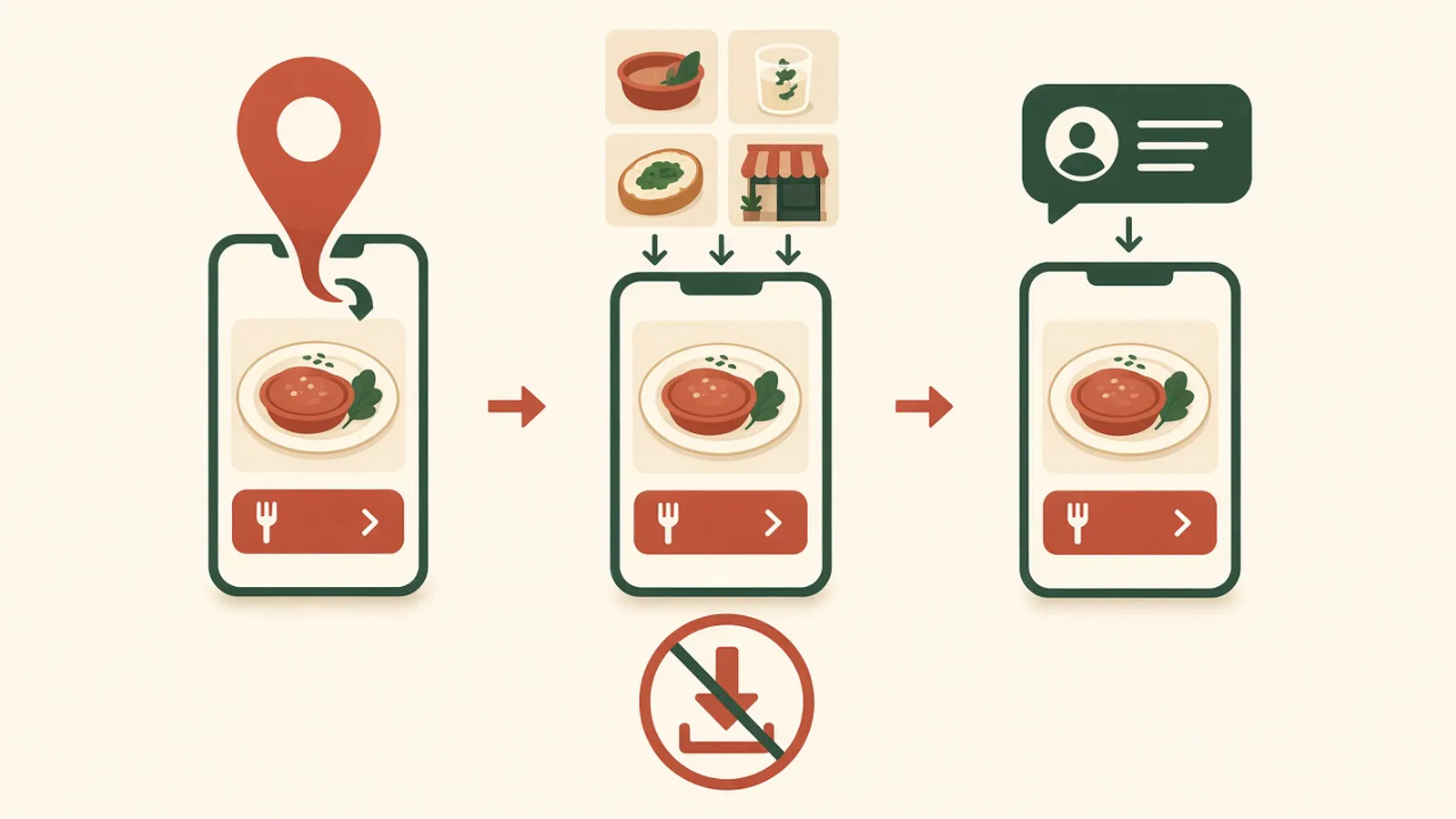
A PDF or a button to another brand did not finish mobile ordering. The guest should see your food, choose the size and toppings the counter already asks, watch a running subtotal, and pay. A notes box is for an exception, not for building the plate.
Hours should close the cart when the kitchen is closed. A sold-out item should come off in restaurant admin during the shift. The paid order can print on the printer you already use. If you need a print path, hardware is $500 one-time: a mini PC print server and a receipt printer.
Accounts, saved orders, and loyalty points on storefront purchases are on every plan. You set the reward. A marketplace receipt does not build that list. The first visit still has to be short enough for one hand. How the menu should be built is online ordering menu.
Pay on the Phone You Already Have
Bring a Stripe token, connect Authorize.net, or sign up with Electronic Payments. Apple Pay is on Growth and Growth Plus, through Authorize.net. It is not on Standard. Cash on delivery can cover orders while a merchant application is processing.
Checkout does not add a tip prompt, so do not advertise one. The guest should see your name on the payment. Card checkout on the website is mobile ordering. An install is a later habit.
Pickup and a Zone, Not a Fleet
Pickup is for the guest already outside. Delivery is only the streets you already serve. You set the zone, the radius, and the fee, for example free delivery within 4 miles. The guest should see the limit before they pay. If a dish will not survive the ride, leave it off delivery.
MicroSky Food does not dispatch drivers, run a fleet, track drivers, or offer geofencing. Mobile ordering here means the guest can choose pickup or delivery on your site. It does not mean a driver app or a ping when someone drives past.
The iOS App Is a Later Door
The website is on every plan, and it works on phones without a download. Do not wait for an icon before you share the link. There is no Android app to install. The site is the door you can put on Google, in a bio, and in a text today.
A branded iOS app, with your logo, saved orders, and push, is on Growth and Growth Plus after 3 months on Standard. There is no published Android app. The icon does not replace the link. What it includes is food order application. Whose checkout you keep is online ordering for restaurants.
What Mobile Ordering Costs
On Standard, choose $249 per month plus 5% of net sales, or $499 per month flat. That is the phone site, the menu, zones, accounts, loyalty, Google order links, printing, and admin. Growth is $499 per month plus 7% of net sales and adds the iOS app, a website redesign, app push, and SEO for 5 keywords a month. Growth Plus is $999 per month plus 10% of net sales and adds email, SMS, and 10 keywords. Both require 3 months on Standard. A 30-day free trial does not replace those 3 months.
Marketplace fees often land in a 15 to 30% band. On a $40 order, 5% is $2 and 30% is $12. The monthly plan sits on top of either figure. A quiet month can feel the subscription first. There is no long-term contract. The lines are on pricing.
Send the Link After One Paid Test
Start the 30-day free trial. The wizard walks through your profile, menu, hours, delivery zones, and billing. A storefront can be set up in about 10 minutes. If you already have a site, onboarding can scan it for menus and prices. Read every item. How it works is the short version.
Pay for one test on your own phone and print it. Then put that URL on the Google order link, in the Instagram bio, and on the receipt. Tell a regular only after the ticket looks like something you would hand a new cook. The iOS app waits until Growth. Restaurants on the platform are on clients. Questions go through contact. See a storefront in the live demo. Start 30 Day Free Trial. Call (888) 960-1359.