
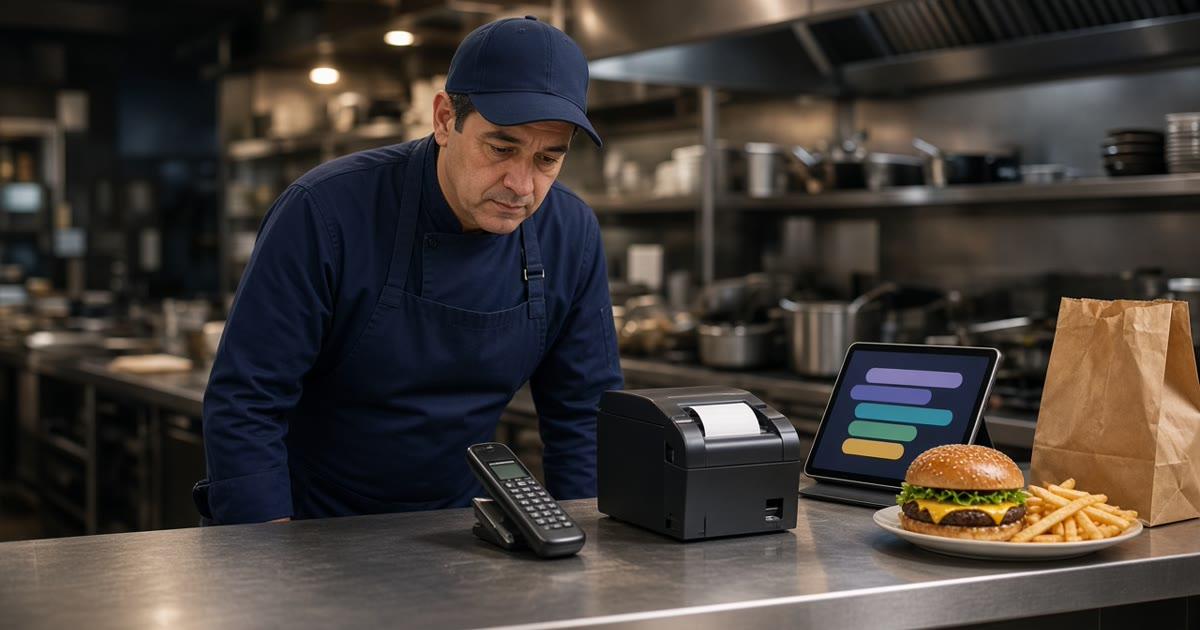
What missed calls cost a restaurant is a multiplication you can do on a card by the phone. Count the calls nobody answered, estimate the share that would have ordered, and multiply by the average ticket. The result is a dollar figure for that window. It is not a national average, and it is not a reason to buy another tool before the three numbers are written down.
This post stays on that count. How staff, a call center, and an agent differ is restaurant phone ordering system. Coverage after you lock the door is 24/7 restaurant phone answering service. The script a person still needs is restaurant phone etiquette. Which reports the admin shows, and on which plan, is restaurant reporting software. The sales report will not do this math for you.
Count the Calls Before You Price Them
Pick one window and write the clock times on the card. Friday from 5 p.m. to 9 p.m. is a window. "The rush" is not. Tally every call that rang and was not finished by a person who could take the order. A hold you never returned to counts. A call you finished counts as answered, even if the guest only asked for the hours.
Cross off vendors, wrong numbers, and guests who called back before you multiply. If you cannot tell them apart, leave them in and say so. Use the nights you have. A lunch shop and a pizzeria will not share a clock.
The sales report in restaurant admin shows orders, revenue, average ticket, and best-sellers for completed, paid orders. It does not draw the hour the phone started ringing out. The card does.
- One window, with a start time and an end time.
- A mark for each call nobody finished.
- A note when the caller was not a guest.
A Worked Example With Hypothetical Inputs
The formula is short. Missed calls in the window, times the share that would have ordered, times the average ticket. You can do it on the back of a guest check. The numbers in this section are made up so the arithmetic is visible. They are not a survey, and they are not your sales report.
Suppose one Friday shows 10 missed calls, you guess that one in four would have ordered, and you use a $28 ticket. 10 times one fourth times 28 dollars is 70 dollars. Change only the share, to one in two, and the same night is 140 dollars. The gap is your uncertainty about the share. It is not a fact about restaurants in general.
Four nights like that imagined Friday would be 280 dollars at the low share and 560 dollars at the high share. Stop there. Replace 10, the share, and 28 with your count, your guess, and your own average ticket.
Where Each Input Comes From
The missed-call count comes from the card or from the log your phone already keeps for that window. The share is your judgment until you answer every call for one comparable night and see how many were orders. Until then, keep a low share and a high share, and treat the gap as the range you are willing to believe.
The average ticket should be yours. On Standard, restaurant admin reports average ticket next to orders, revenue, and best-sellers. Use that figure, or a typical ticket you already recognize from the pass. The $28 above exists only so the multiplication has a third number.
What Those Dollars Do Not Prove
A missed call is not automatically a lost entree. It can be a driver at the door, a guest who already ordered online, or someone who calls back in ten minutes and gets through. If you leave those in the tally, the dollar figure is high on purpose. Say that when you show it to a partner.
Answering does not guarantee you would have kept the full amount. If the line was already refusing plates, the call can become an order you should not have taken. Do not quote 70 or 140 dollars as what restaurants lose. Your card produces the figure you can compare with a wage for that window.
Staff the Window You Actually Measured
If the count is large on the nights you wrote down, the first fix is a person whose job for that window is the phone. Name the hours from the card. A closer who is also bagging and cashing out will miss the third ring. That is the situation the tally is describing.
The person still needs a script and a ticket the kitchen can read. That script is restaurant phone etiquette. How staff, a call center, and an agent differ is restaurant phone ordering system. This page does not restage that comparison.
Call Forwarding Catches the Ring, Not the Ticket
If the handset on the counter is buried, some owners forward the restaurant number to a cell for the window they measured. That can catch the ring. It does not write a kitchen ticket. The person who answers still has to capture the item, the modifiers, pickup or delivery, a name, and payment, then get that onto paper the line trusts.
Voicemail records the miss. The kitchen sees nothing. Count it as unanswered unless the food was made. MicroSky Food does not sell call forwarding. It is a setting on the line you already pay for. If that person is also on the pass, the problem moved to a pocket.
Sky AI Answers Every Inbound Call
Sky AI is the option when the person who would pick up is on the pass or the counter. After the storefront is live, you turn it on in Admin, under Integrations. It is not part of the signup wizard. The Sky AI page says it answers every inbound restaurant call: lunch rush, after close, or when the line is slammed. Inbound calls are unlimited, and there is no per-minute fee.
The guest orders conversationally: menu items, modifiers, pickup or delivery. Sky AI confirms the ticket before anyone pays, then takes the card on a PCI-safe keypad. Sky AI never hears the full card number. The paid ticket lands in MicroSky Food and prints on the same kitchen flow and receipt printer as a website order. Phone orders are paid before they print, so the pass sees a real ticket, not a maybe.
A ringing phone does not have to mean a missed order, because the inbound line is picked up. A hang-up is still a hang-up. Place a test call with a modifier and read the ticket before a Friday you plan to rely on it. The walkthrough is how AI phone ordering works for restaurants and MicroSky Food Sky AI phone ordering.
What Sky AI Will Not Take
Sky AI takes a paid pickup or delivery order from the published menu. Complaints, a manager, catering that is not on the menu, and reservations stay with a person. It is not a reservation book. MicroSky Food does not dispatch drivers or offer geofencing. You set the zone, the radius, and the fee.
After close is covered on the 24/7 restaurant phone answering service page. The rush, when the phone and the walk-in ask at once, is how to keep restaurant service consistent during peak hours. This page is the cost of the calls you did not take.
Put Your Count Next to the Plan
Once the inputs are yours, put that night's figure next to the price of answering the line. On pricing, Standard is $249 per month plus 5% of net sales. Growth is $499 per month plus 7% of net sales. Growth Plus is $999 per month plus 10% of net sales. Growth and Growth Plus require 3 months on Standard. A 30-day free trial does not replace those 3 months. There is no long-term contract.
Sky AI is on Standard, with no per-minute fee, and on Growth and Growth Plus because they include Standard. Hardware is $500 one time if you need a mini PC print server and a receipt printer. DoorDash, Uber Eats, and Grubhub often charge 15 to 30% of a sale that already happened. A missed call never started. Keep those on two lines.
Write the Count This Week
Tape a card by the phone for one loud window. Mark the misses, cross off callers who were not ordering, and multiply twice, with a low share and a high share. The gap is the uncertainty. The two products are the cost you can defend.
Then choose a way to catch the next window: a person whose job is that phone, a forward to someone who can write the ticket, or Sky AI on the inbound line after onboarding. The sales report will show the orders you completed. It will not show the calls you missed. Which reports do exist, beside live orders and menu edits, is restaurant reporting software. Restaurants already ordering this way are on clients. The guest side you can click first is the live demo.
Setup is how it works. Questions go through contact. Start 30 Day Free Trial. Call (888) 960-1359.