
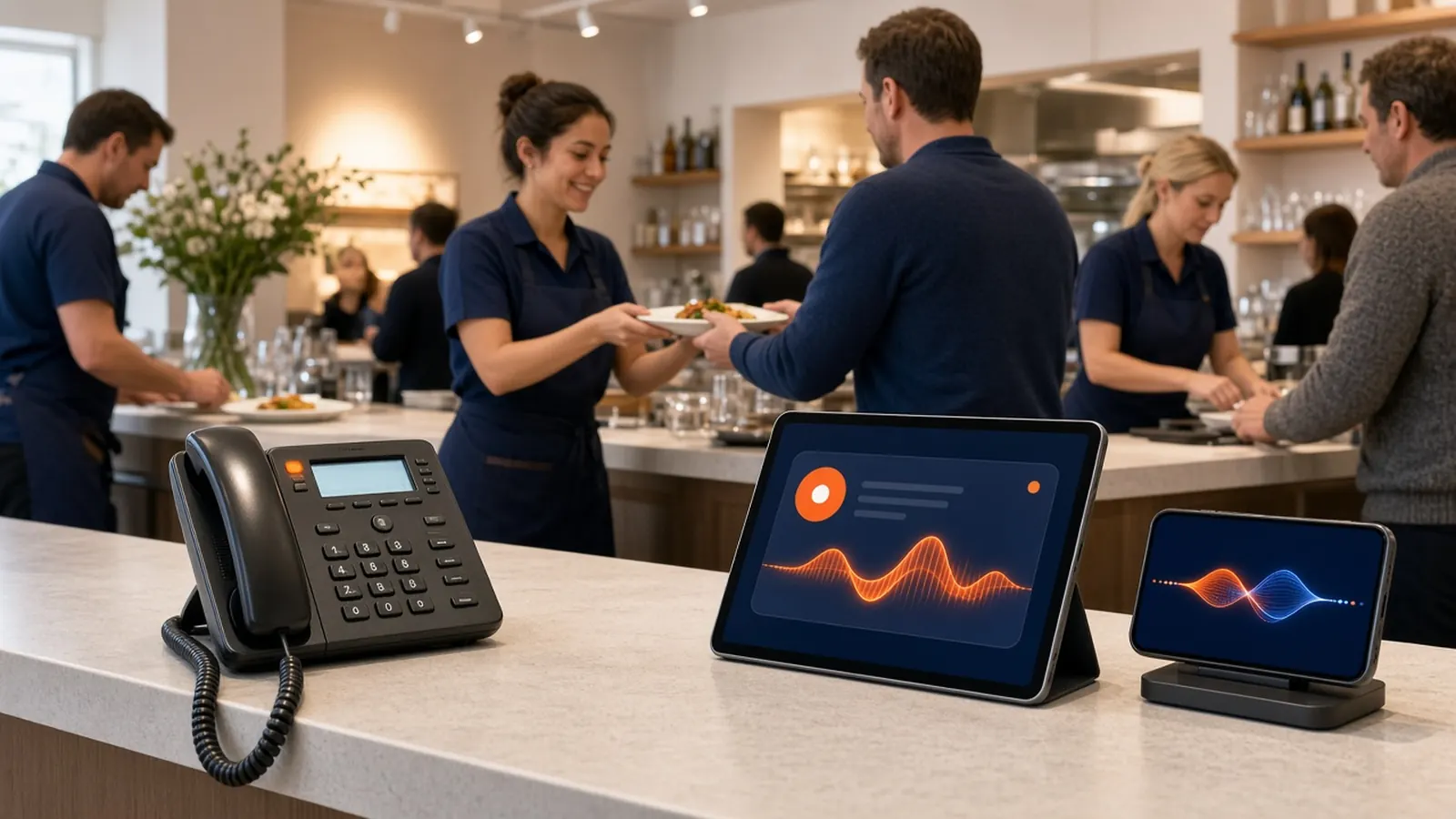
Three ways the phone gets answered
A restaurant phone ordering system is a promise that a ringing line becomes a ticket. The oldest version is a person with a pad or the register. The outsourced version is a call center that keys the order somewhere. The newest version in a normal independent shop is an AI agent that can speak the menu, take the modifiers, and send a paid ticket to the printer.
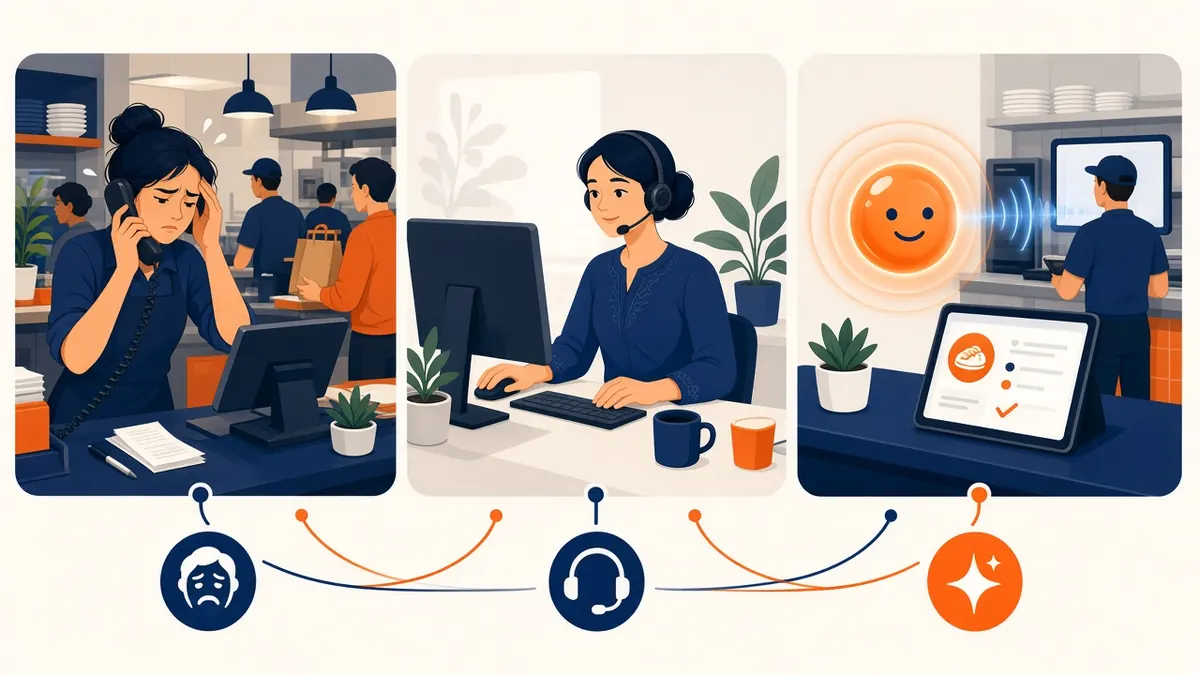
All three can work. They fail in different places. Staff fail when the rush makes the phone optional. Call centers fail when the menu in their script is behind yours, or when the handoff to your kitchen is a second retype. Agents fail when they are allowed to take orders the kitchen cannot see, or when guests cannot pay before the food is promised.
Pick by the failure you have, not by the demo reel. If missed calls are the issue, you need coverage. If wrong pies are the issue, you need modifiers and a familiar ticket. If unpaid no-shows are the issue, you need payment before the print.
Staff on the line
A person is still the right restaurant phone ordering system when the call volume is low and someone can leave the pass without the food suffering. Guests with odd questions get a human. The cost is hidden in wages and in the orders you remake when the pad was messy.
Write the script down anyway. Item, modifiers, pickup or delivery, name, payment. A system that lives only in your best closer's head will vanish on their day off. The pad should match the website's words so the cook does not learn two dialects.
Staff coverage does not expand because you wish it would. If the honest schedule has nobody for the phone from 6 to 8, you do not have a phone system at dinner. You have a hope.
Call centers
A call center sells coverage you do not have to schedule. The questions are whose menu they read, how fast a price change reaches them, where the order is typed, and what you pay per call or per minute. Ask for a recording policy and for what the guest hears when the center is also slammed.
The kitchen still needs a ticket. If the center emails a paragraph, you recreated the pad with a delay. A restaurant phone ordering system that does not print is a message service.
Compare the monthly reality, not the setup slide. Include mistakes. A wrong order from a script that lagged your 86 list is a cost. So is a guest who wanted a simple pie and got a hold queue.
- Who updates the center's menu the hour you 86 an item?
- Does the order print, or does someone retype it?
- Is payment taken before you cook?
- What is the per-minute or per-call price?
- Can you leave without losing the phone number?
An AI agent on your own stack
Sky AI is the version that lives next to the storefront. The guest calls. The agent walks the menu like a counter person, confirms the order, and sends a keypad for the card. The ticket that prints is paid. Your cooks do not learn a new form. There is no per-minute fee, and inbound volume is not metered.
It will not be wiser than the menu you gave it. Modifiers that are missing on the site will be missing on the phone. Fix the menu first. A restaurant phone ordering system amplifies the catalog. Garbage in, wrong pie out.
Keep a path for calls that are not orders. Post the number you want orders on, and let a person take the catering question or the complaint. Do not claim the agent does jobs the product page does not list.
Choose and roll out
If you are already on MicroSky Food, print web tickets until they are boring, then enable Sky AI. How it works is the storefront. The phone is the integration after. Listen to a few calls if the product gives you that chance, and read every early ticket.
If you are choosing among staff, a center, and an agent, run one busy night on paper: missed calls, remakes, and who stopped cooking to write. Buy the option that shrinks that list. Do not buy a second phone brand for the logo.
Tell guests the number still works. A restaurant phone ordering system succeeds when regulars stop hearing a busy signal and the food matches the call.