
Start with the call, not the model
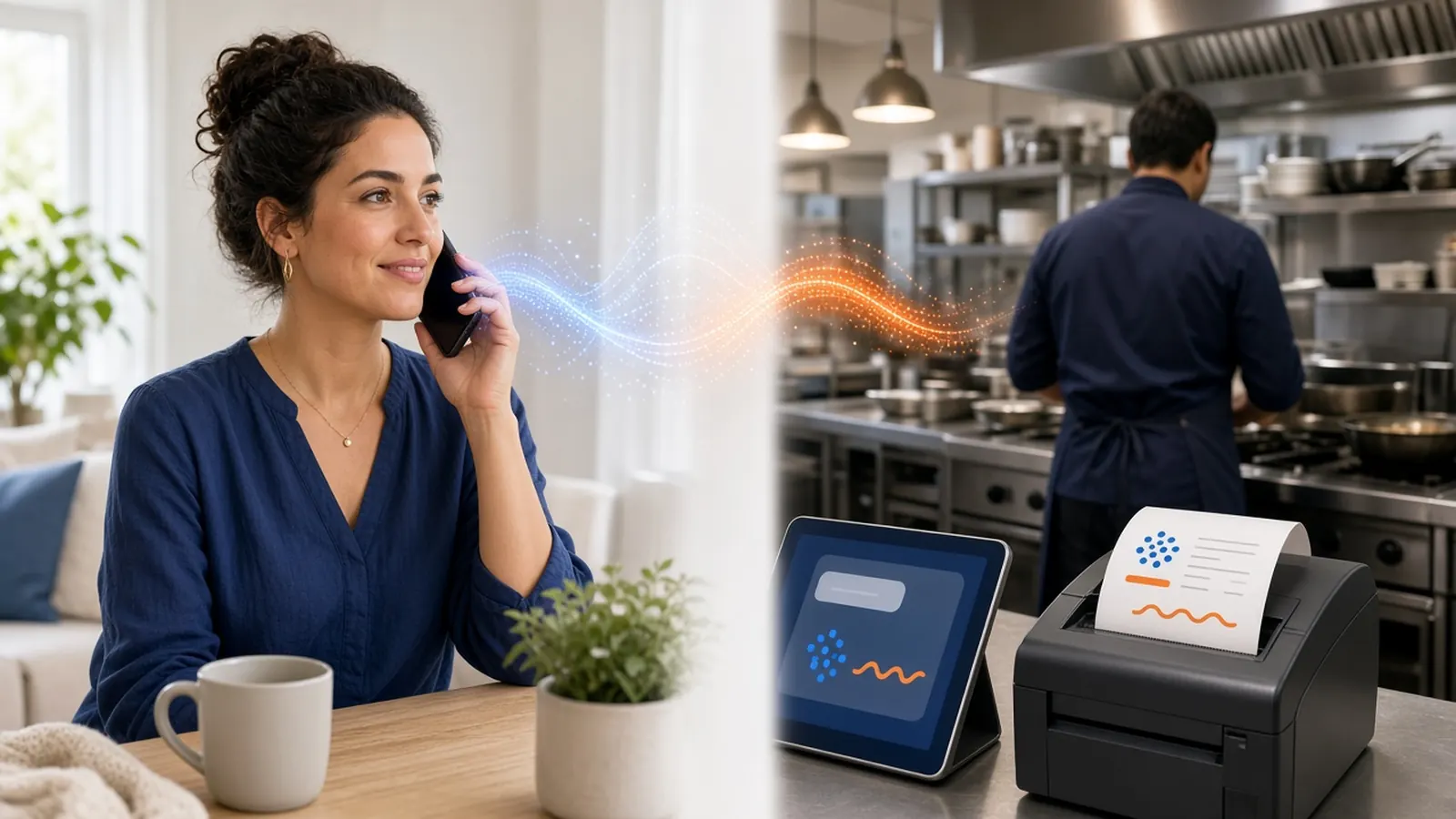
How AI phone ordering works for restaurants is easier to trust if you ignore the science fair. A guest dials the number on the door. Something answers in a voice that can talk through a menu. The guest says what they want, including the annoying modifiers. They hear it back. They pay. A ticket prints. If any of those steps is missing, you do not have phone ordering. You have a chatbot with a phone costume.
The menu the agent knows should be the menu the website sells. Two catalogs is how the phone promises a special the site 86'd. Sync is not a technical nicety. It is the order.
Guests do not need to know the vendor's architecture. They need to know they called the restaurant and the food will match. Your staff need to know the ticket is paid and familiar.
Greeting and the shape of the conversation
The greeting should sound like your shop picked up: the name, the fact they can order, pickup or delivery if you offer both. A long brand speech wastes the reason they called. How AI phone ordering works for restaurants in the real world is a slightly patient counter person, not a commercial.
The guest can speak in normal food language. The agent has to map that onto items and modifiers. This is why vague menus fail twice, once on the site and once on the phone. If the button says large and the guest says family size, someone has to have connected those words.
Confirmation is the step that saves the remake. Read the item, the modifiers, the time or the delivery, and the name. Let them say no. A system that rushes to payment will print confident mistakes.
Modifiers, then money, then paper
Modifiers are the phone call. Extra sauce, no onion, half pepperoni, oat milk. How AI phone ordering works for restaurants that sell real food means those are structured choices, not a blob of text. The ticket should show them as lines.
Payment is a handoff to a keypad so the card is not spoken into a recording. Say that plainly if a guest hesitates. The agent does not hear the full number. The order is not printed as a hope. It is printed when it is paid, on the same printer as the website.
Status then lives on the admin board with the other orders. The cook does not need a separate ritual for robot tickets. If you create one, you will skip it when you are busy, which is the only time it matters.
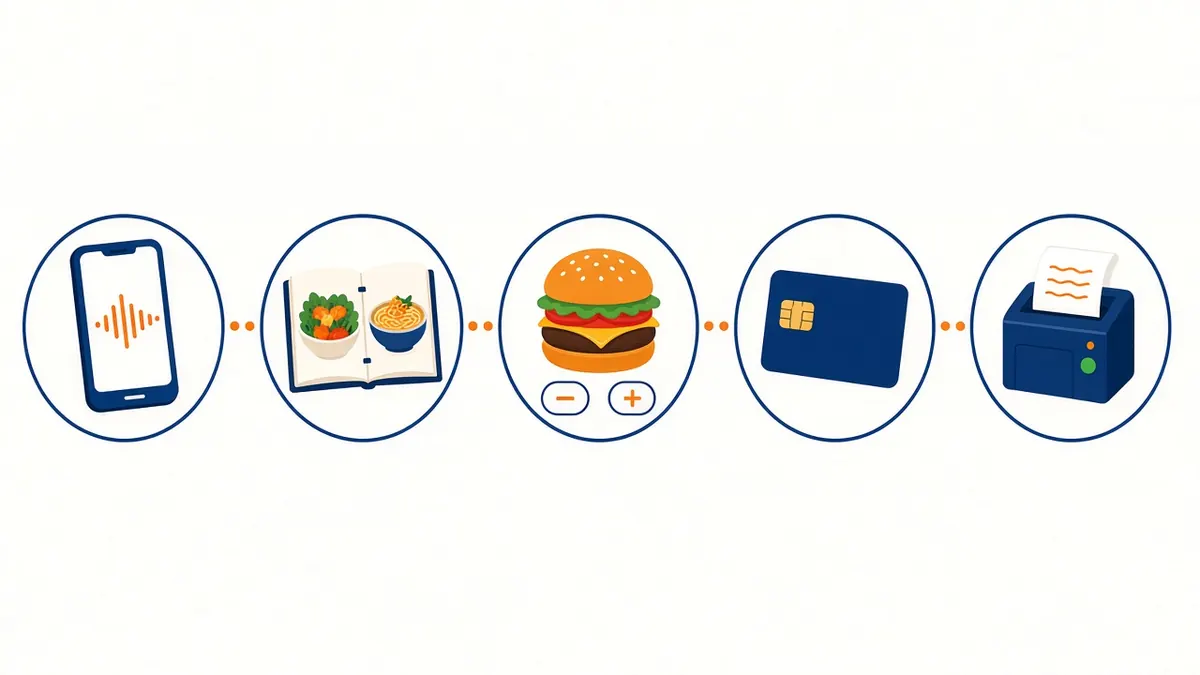
- Greeting that invites the order.
- Items and modifiers from the live menu.
- A confirmation the guest can correct.
- Card on a keypad, not spoken aloud.
- A paid ticket on the usual printer.
What this does not automate
It does not replace a manager for a complaint, a catering menu you have not entered, or a guest who needs a human for a reason the menu cannot see. How AI phone ordering works for restaurants is the standard order. Leave room for the non-standard call.
It does not know you are out of an item unless the menu says so. 86 on the admin is part of the phone system. The agent is not looking at the walk-in.
It does not bill by the minute on MicroSky Food. If another vendor does, that is a different product. Do not compare a metered center and an unmetered agent as if the invoices match.
Prove it with one call
After the site is live, open Integrations and enable Sky AI. Call from the parking lot. Order the item guests always customize. Fix a modifier. Pay with a card you can refund. Walk in and read the ticket before you tell the dining room. How it works is everything before that call.
Do a second call at a loud hour, from a regular who will be honest. Ask what felt slow. Fix the menu wording before you blame the phone. How AI phone ordering works for restaurants is mostly how clear the menu was.
When those two calls print food you would serve, you understand the system. You do not need a diagram on the wall. You need the habit of 86ing items and reading tickets.