
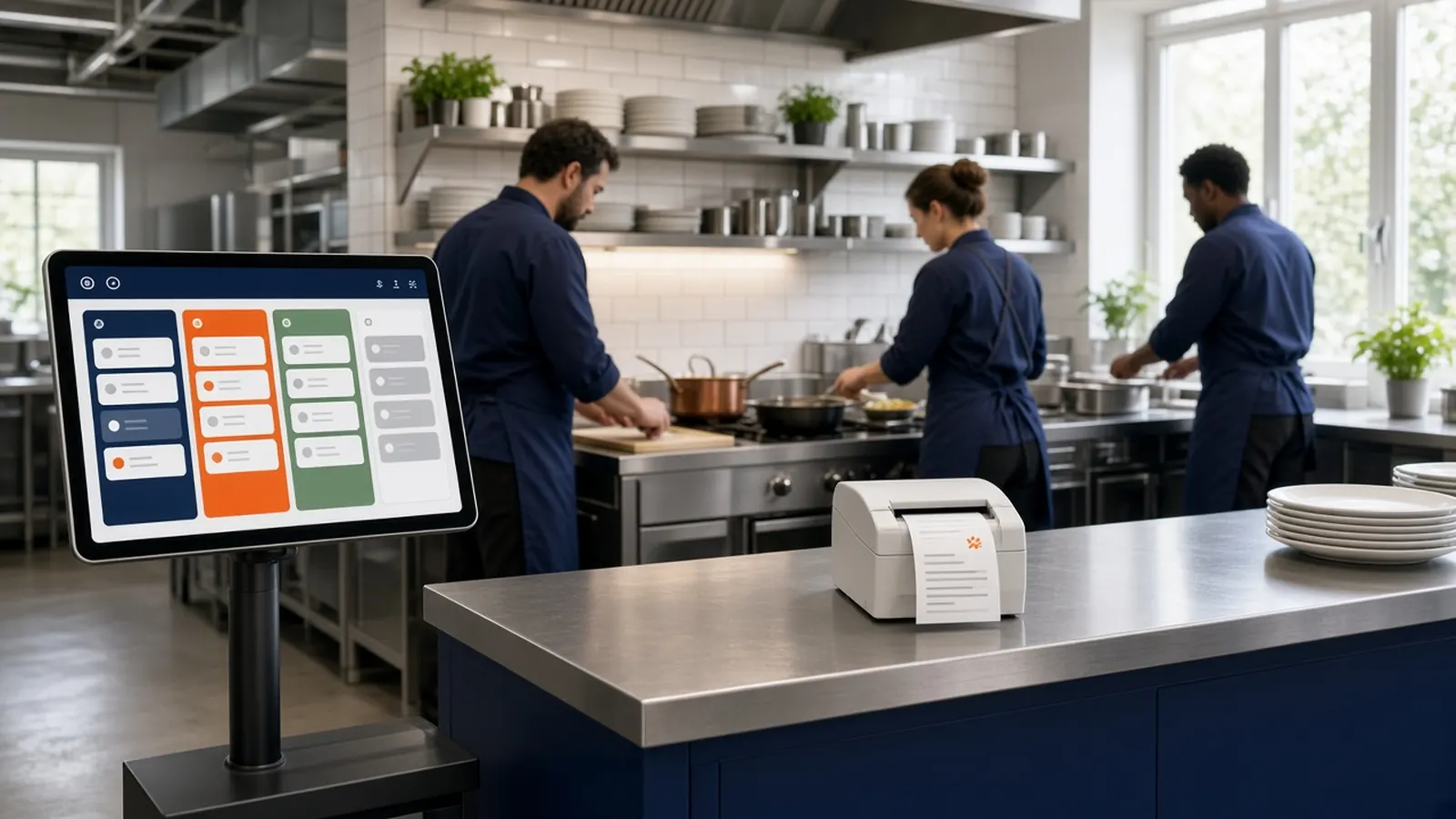
Start where the ticket is born
How to improve restaurant operations is usually framed as culture. Culture matters, and so does the physical path of an order. If three tablets chirp in three voices, the team is not disorganized. The system is. Fix the path before you fix the speech.
Watch one rush with a notepad and no solutions. Where does a web order appear? Where does a phone order get written? Who reads the marketplace tablet? How many times is the same meal retyped? The retypes are the tax. They are also where modifiers die.
The goal of the first month is fewer places an order can exist. One board for the channels you control. One printer layout the cooks already trust. Status words everyone uses: new, preparing, ready, out the door.
Fewer tablets, cleaner tickets
Each extra tablet is a person who has to hear it. In a small kitchen that person does not exist, so the tablet screams until someone guilty walks over. Moving your own online orders onto the admin you already glance at removes a voice. Printing them as a normal ticket removes a translation.
Clean means the cook does not need the register story. Size, modifiers, and notes that are truly notes. If the ticket is a paragraph, the menu setup is wrong. Fix the menu, which is an operations task, not a marketing task.
Marketplace tablets may remain while that channel remains. Do not pretend software deleted them. Do decide that your site and your phone will not add two more. How to improve restaurant operations is often subtraction.
Roles that match the shift
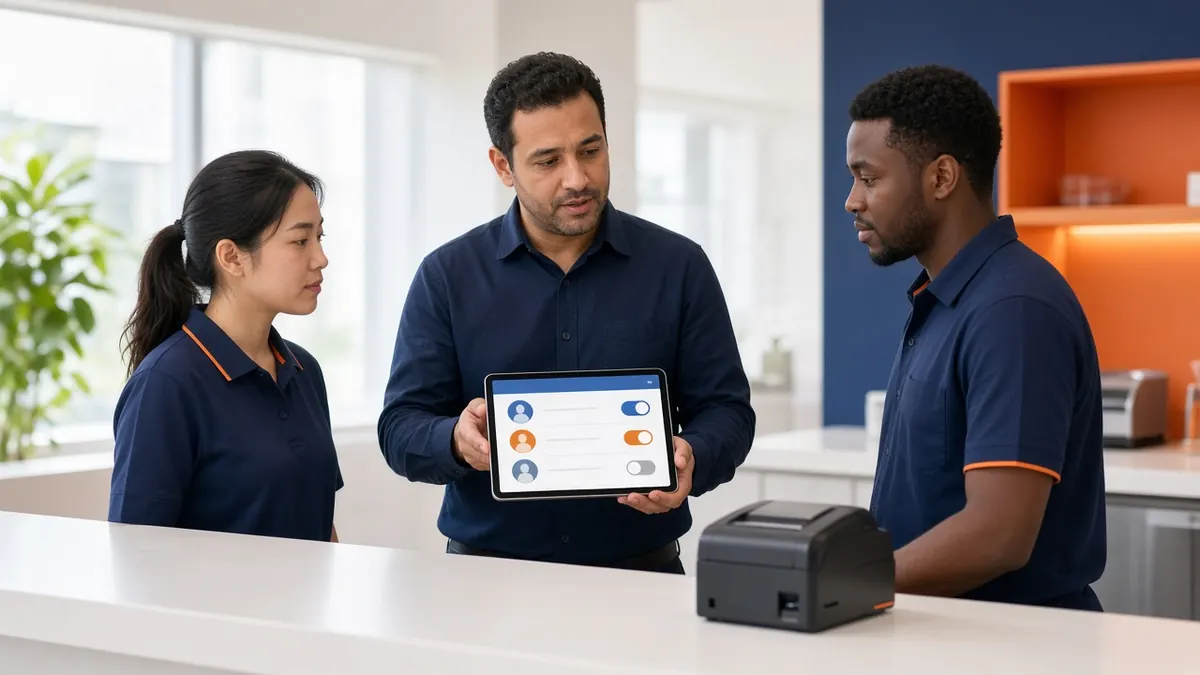
Write the shift as jobs, then give logins. Who accepts that an order is on the board? Who 86s the soup? Who can refund a guest who got the wrong entree? If the answer is always the owner, the owner is the bottleneck and also the single point of failure.
Staff roles in the admin are how you stop sharing one password on a sticky note. People make fewer careless edits when the login is theirs. You can also see who changed the menu. That is not surveillance as a hobby. It is how you undo a mistake on a Saturday.
Train the role, not the whole product. A twenty-minute session on status and 86s will do more than a tour of every report. Reports are for the morning after, when you look at what sold.
- One board for site orders.
- Phone orders on that board once the site tickets are trusted.
- One ticket layout.
- A login for the closer and a login for the line.
- Marketplace tablets only where that channel is still intentional.
The phone is an operations problem
A ringing phone during the rush is not a marketing issue. It is a person who stops plating to write a pie on a pad. Sky AI is the option that answers the inbound call, takes the modifiers, collects card payment on a keypad the AI does not hear, and prints a paid ticket. Unlimited inbound, no per-minute fee.
Do not turn it on the same night you change everything else. How to improve restaurant operations fails when every lever moves at once. Get the board calm. Then add the phone in Integrations.
Tell the staff what the phone will do. If they think a robot is about to fire them, they will fight the tickets. The point is that the pad and the retype go away. The cooks still cook.
A two-week experiment
Week one, site orders only, on the admin, with the old register untouched for the room. How it works if you are not live yet. Count interruptions, not vanity metrics. Did someone retype? Did a tablet get ignored?
Week two, fix the menu lines that caused questions, and only then consider the phone. Meet for ten minutes after one rush and ask what was louder than it should be. Fix the loudest thing. Ignore the rest until the loudest thing is gone.
You will know how to improve restaurant operations worked if the pass is quieter and the food is the same. If the food got worse, you optimized the wrong board. Go back to the ticket.