
White label restaurant ordering is an operations decision. The guest-facing half (your domain, your chrome, your list) is white label online ordering. This post is what happens after they pay: live tickets, the printer the cooks already trust, staff who should not see payroll, and a board that is not a marketplace tablet blinking next to the soda machine.
Independents get sold “white label” on a homepage mockup and then spend Friday managing three tablets: DoorDash, Slice or the pizza app, and whatever branded device the last vendor shipped. That is not a kitchen. That is a notification farm. White label restaurant ordering should collapse first-party tickets into one admin and one print path. The marketplace can keep its own tablet if you still want discovery. Your regulars should not live there.
MicroSky Food is the ops path: admin in the browser, print to the receipt printer you own, bring your own processor. About 10 minutes to stand the stack up. The rest of the afternoon is menu rules and a test ticket. We will not invent competitor device prices. Ask what they ship.
A marketplace tablet is not a kitchen
A tablet from DoorDash, Uber Eats, or Slice is a remote control for someone else’s aisle. It beeps. Someone acknowledges. A ticket may print if you paid for that path, or a person copies the order onto a pad. When two tablets beep at once, the make line guesses.
White label restaurant ordering should not add a fourth beep. First-party orders belong in your admin: new → preparing → ready → out the door, the same language the counter already uses. If the branded channel still needs its own proprietary slab, you bought a listing with a skin.
Keep marketplace tablets if they still send strangers. Do not let them become the system of record for people who already know your name. That is how you lose the regular into an app you do not own.
Tickets, printers, and one board
Score every white-label vendor on the make line, not the homepage.
Live tickets the counter can work
Restaurant admin is the product on this side: live orders the moment they land, status the kitchen and the window agree on, 86 an item and the storefront updates. Analytics (tickets, revenue, average, best-sellers) so you know what to prep before you print the next menu.
If the “admin” is a locked vendor tablet that can only acknowledge, you do not have white label restaurant ordering. You have a remote for a storefront you cannot operate.
The printer you already trust
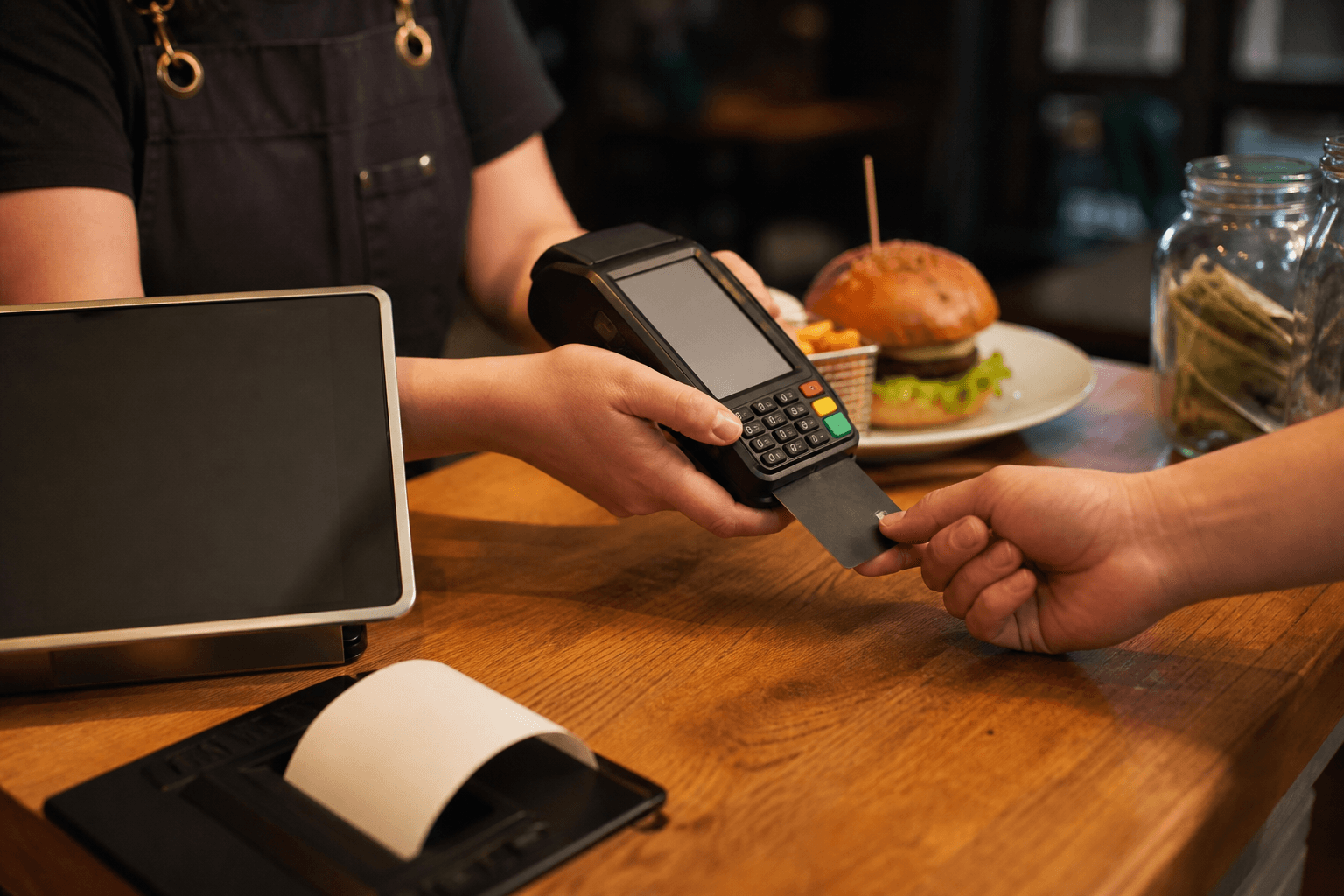
The kitchen does not care about your CMS. It cares whether the ticket lands in the same font, on the same printer, as a phone order. MicroSky Food prints to the existing receipt or kitchen printer. Optional ~$500 hardware: mini PC print server plus a receipt printer if you need a bridge. No POS rip-and-replace.
Ask every vendor: day-one print path, what happens if the Wi-Fi hiccups, whether their device is mandatory. A required slab is a line item (hardware plus training), even when the software looks tidy.
Staff who should not see everything
Managers, kitchen, counter. Different eyes. White label restaurant ordering that dumps every login into owner-level access will leak card settings and reports onto a shared iPad. Role-based staff accounts are not enterprise theater. They are how you stop the night person from editing prices.
MicroSky Food staff roles live in the same admin as the tickets. Browser, not a special OS. A person at 888-960-1359 when a topping price is wrong at 5:40. Staten Island, 900 South Ave #300.
Phone orders on the same board
The landline is still a station. If web tickets print and phone tickets are still handwriting, you have two kitchens. Sky AI - Phone Agent answers unlimited inbound calls, takes pickup or delivery, collects the card on a PCI-safe keypad (Authorize.net style: the agent never hears the full number), and prints the paid ticket into MicroSky Food. No per-minute fee. Enable after onboarding in Admin → Integrations.
That is ops, not a chatbot demo. Paid before it prints. Same board as the storefront. If a white-label vendor’s phone story is “forward the line to a call center with a per-minute clock,” put that clock on the quote.
Not a POS replacement, and not a marketplace
A full POS stack wants to be the system of record: rail, tables, processing, modules. If the terminals already work, white label restaurant ordering should sit beside them, not rip them out.
Owner.com usually sits on the POS you already run and sells growth (SEO, app, marketing) around it. Different ops footprint. Published MicroSky Food plans are on pricing.
ChowNow is the branded-ordering sibling. Same first-party idea; processor and device policy are the levers. See ChowNow alternative. Slice and DoorDash are marketplaces. Their tablet is the thing this article is trying to get off the regulars. Pizzeria menu shape (sizes, toppings, half/half) is pizza online ordering software.
MicroSky Food on the make line
Wizard: branded storefront + admin in about 10 minutes at food-onboard.microskyfood.com. How it works is the three-step version. Payments: Stripe, Authorize.net, or Electronic Payments. Cash on delivery while a merchant application is processing. Printing: existing printer; optional ~$500 bridge.
Published plans: Standard $249/month + 5% on net storefront sales; Growth $499/month + 7% (iOS app + SEO); Growth Plus $999/month + 10% (email, SMS, push, 10 keywords/month). Growth tiers need 3 months on Standard. 30-day free trial, month-to-month.
Look at the board before you argue: admindemo.microskyfood.com and the guest side at demo.microskyfood.com. Print a test ticket on your printer. Take a staff card. Then decide whether white label restaurant ordering needed another tablet.
Parallel run, then cut the extra beep
Week one: wizard, menu, one printer, one test pie, staff logins that are not the owner account. Week two: Google order link for regulars, Sky AI if the phone is the leak. Week three: counter script points regulars at the branded URL. Marketplace tablets stay for discovery until those tickets are the exception.
Do not rip the old branded device on Monday if Friday is booked. Dual-channel until the kitchen is bored of the new tickets. If the vendor will not let you print to the hardware you have, they are selling a slab, not white label restaurant ordering.
The guest should feel your brand at checkout. The line should feel one printer. If you only needed the brand half, read the storefront post. If you needed a new POS, call the POS vendors. If you needed tickets you can run, stay here and start the trial.