
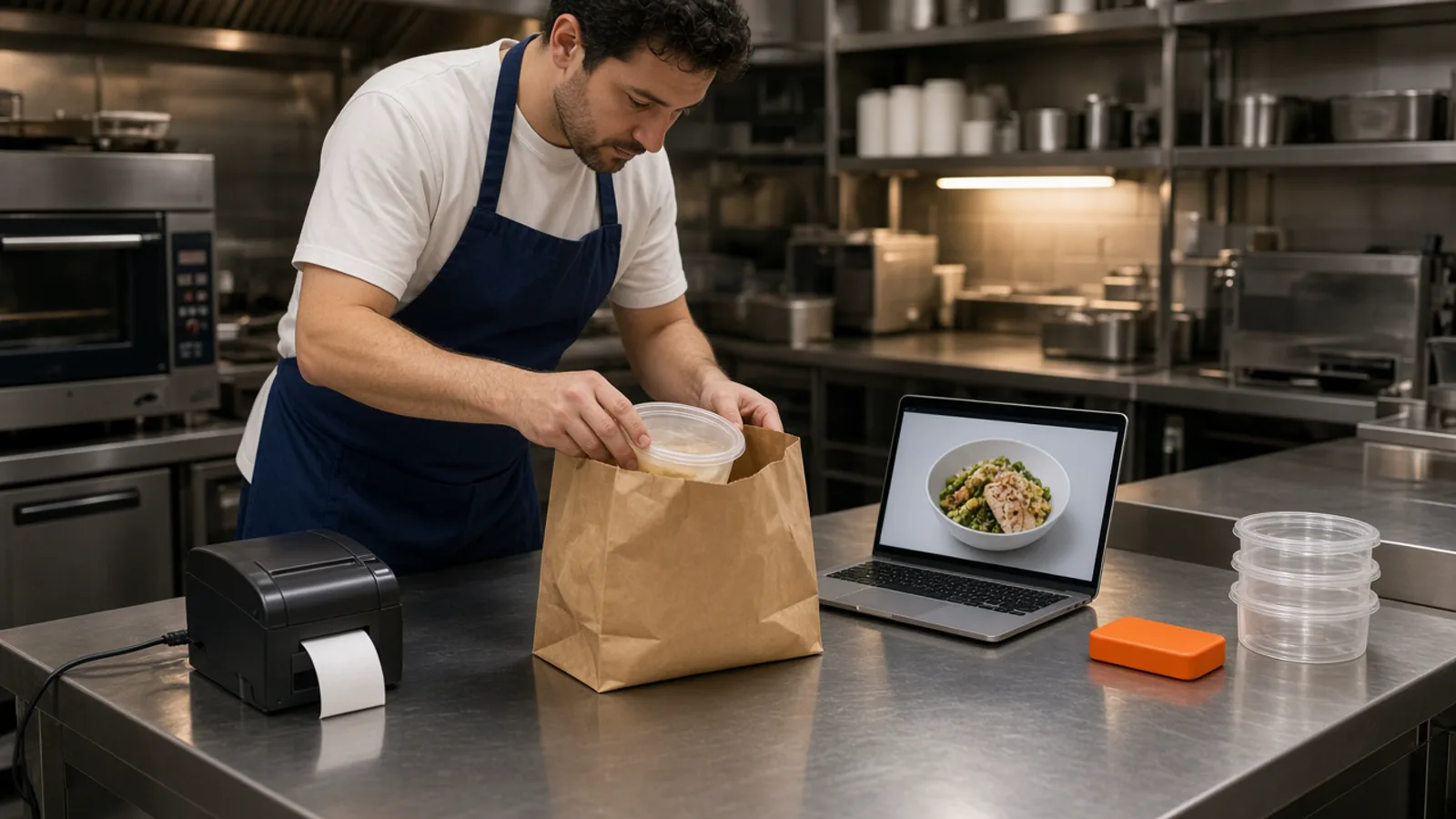
Cloud kitchen software is the site for a kitchen with no dining room
A search for cloud kitchen software often turns up a driver network, a virtual-brand console, or a general restaurant stack. This page is the narrower job: a ghost kitchen or a delivery-only operator that wants guests to order under its own name, on a site it controls, from a kitchen that does not have a dining room.
A walk-up counter that lives on collection is the online ordering system for takeaway. The live cart and the print, for any shop that is open now, is an on demand food delivery platform. Menu edits and sales reports, as a buyer question, are restaurant ordering software. A second public name from a kitchen you already run is how to start a virtual restaurant. How to talk about a tip on the bag is should I tip for takeout. Stay here for the delivery-only kitchen. The storefront is online ordering.
Your name on the order, not only a marketplace tile
Checkout should run on your domain, with your photos and your prices. A button that leaves for someone else's app is a referral. DoorDash, Uber Eats, and Grubhub often charge 15 to 30% of that sale.
The storefront is on your domain, and the first ticket does not wait on an app install. The site is mobile-first on every plan. Standard includes a Google order link. Point it here. A branded iOS app is on Growth and Growth Plus after 3 months on Standard. There is no Android app.
One concept, one storefront
There is no switch that runs several public brands from one menu. A second concept needs its own storefront, its own domain, and its own Google order link. That is a second setup, not a tab inside this one. A category on the original menu is still the original brand.
Keep the first menu short enough that the same cooks can fire it. If a dish will not survive a car, do not publish it for delivery. A shared commissary is still your menu and your hours. The platform does not schedule the building or bill the other kitchens.
Delivery you set, and a door only if you have one
You set the zone, the radius, and the fee. An example is no charge inside 4 miles. You still arrange the car. MicroSky Food does not dispatch drivers, run a fleet, track a driver, or draw a geofence. If a real door can hand off a bag, turn pickup on so the guest sees a ready time before they pay. If the only door is a loading dock, leave pickup off.
Ordering opens and closes with the hours you post. Someone on the shift needs a login in restaurant admin that is not the owner's password, so a sold-out item can come off during service.
A ticket the line can read without a host stand
New orders appear in restaurant admin when they are placed. Staff move each one from new to preparing to ready to delivered. Delivered is a mark the kitchen sets, not a driver on a map. Modifiers carry a price when the choice costs more, and the ticket can print each one on its own line with a name on the bag.
A $500 one-time hardware package is a mini PC print server and a receipt printer, or use a printer you already have. Admin runs in the browser. This is not a register and not a kiosk. Place one paid test and read the paper. The live demo is a storefront you can click first.
Phone orders when nobody can walk up
Sky AI answers inbound calls, walks the menu, takes pickup or delivery, and collects the card on a keypad. It does not hear the full card number. The paid ticket can print with web orders. There is no per-minute fee. After onboarding, open Admin, then Integrations, and enable it when a web ticket looks right. See Sky AI. The phone follows that menu. A call is not a second menu.
Repeat guests without a dining room
Accounts, saved orders, and loyalty points on storefront purchases are on every plan. You set the reward. Points do not accrue on a marketplace receipt. The customer list stays yours. Signed-in guests can pay with a saved card. Apple Pay is on Growth and Growth Plus, through Authorize.net, and not on Standard.
Email and SMS to that list are on Growth Plus only, at $999 per month plus 10% of net sales on online orders, after 3 months on Standard. Push to the branded iOS app is on Growth and Growth Plus after those 3 months. Until then, the bag and the Google order link are the send. See marketing.
What cloud kitchen software will not do
It will not run several virtual brands from one dashboard, dispatch drivers, track a car, or draw a geofence. It will not run a kiosk or a register. It will not add a tip prompt at checkout. Say any tipping policy on the menu or the bag. That conversation is should I tip for takeout.
The percentage on a plan applies to online orders. MicroSky Food takes no percentage of in-store sales.
What the ordering site costs
On pricing, Standard is $249 per month plus 5% of net sales on online orders, or $499 per month flat. Only that flat Standard option leaves off the percentage. Growth is $499 per month plus 7% of net sales on online orders. Growth Plus is $999 per month plus 10% of net sales on online orders, after 3 months on Standard. A 30-day free trial does not replace those 3 months. There is no long-term contract.
Cards run through Stripe, Authorize.net, or Electronic Payments. Every plan includes meta titles, descriptions, canonical URLs, JSON-LD, and a sitemap on the storefront. Setup is how it works.
Open with the menu you already fire
Start the 30-day free trial. The wizard covers your profile, menu, hours, and billing, and a storefront can be up in about 10 minutes. Publish the plates the line already fires, draw a zone only where someone can deliver, and turn pickup on only if a door can hand off a bag.
Kitchens on the platform are on clients. Questions go through contact. Start 30 Day Free Trial. Call (888) 960-1359.