
A QR Code Ordering System Is a Link You Can Print
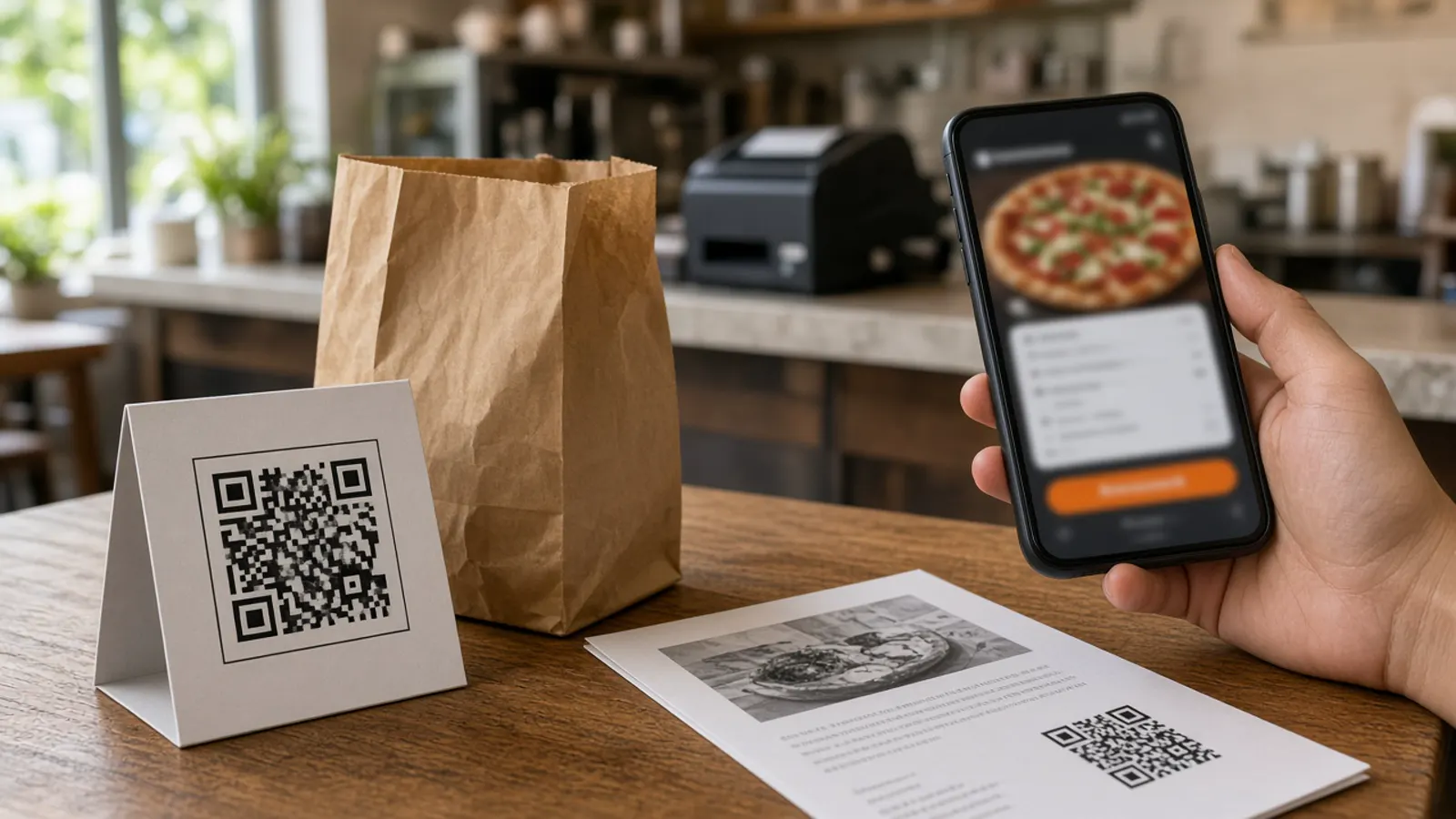
Owners who search for a qr code ordering system are often shown a tablet on every table and a register that knows the seat. MicroSky Food is not that product. This page is a code on a table, a counter, a flyer, or a bag that opens your branded ordering menu.
The phone site without a printed code is mobile ordering. The Google listing button is google ordering. How the site gets onto your domain is restaurant website builder. A second public name from the same kitchen is how to start a virtual restaurant.
Put the Code Where the Guest Is Already Standing
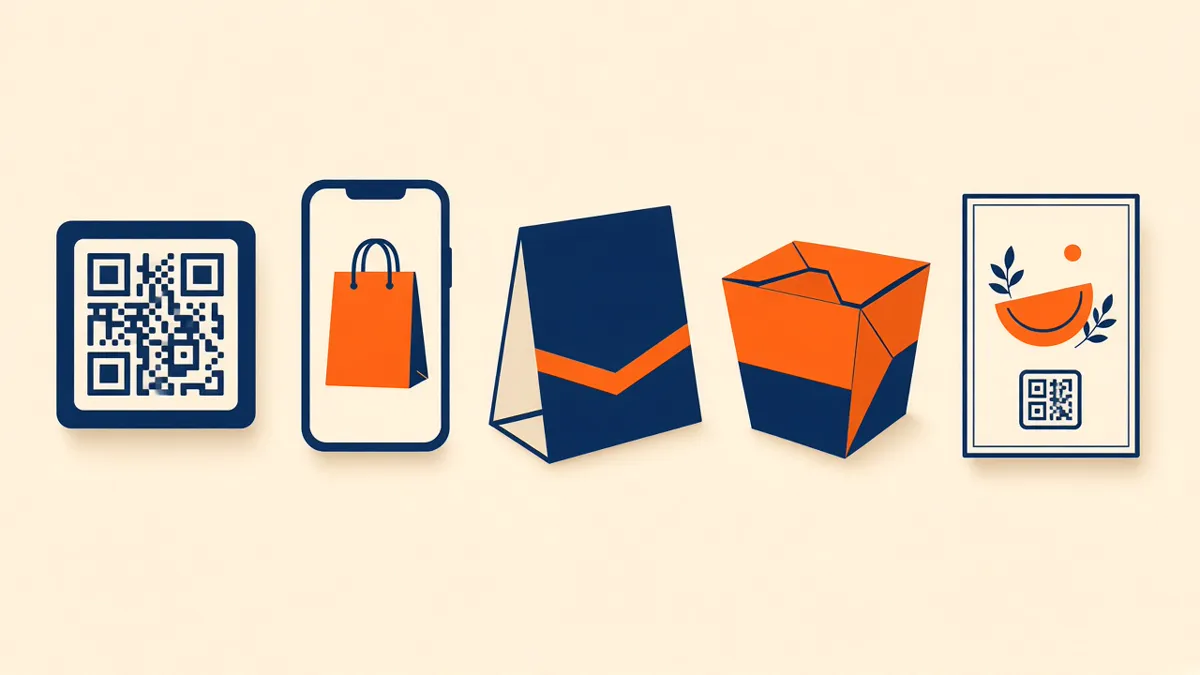
Four places earn the ink: a table tent, a counter card, a flyer, and a stamp on the bag or the box. The code should be large enough to scan in the light you actually have.
Those codes should open the same branded ordering URL, unless you run a second site for a second name. The guest should see your photos, your prices, and the modifiers the kitchen already asks. Scan it on a phone that is not logged into admin before you print a stack.
One URL, Not a Code That Knows the Table
The code stores a link. It does not store a table number, a server name, or a seat. If two rooms need different menus, edit the menu or use a second site. Write the table on the ticket yourself if the kitchen needs it.
Read the URL before you print. A code that still opens an old vendor or a marketplace will keep doing that. The guest notices when the receipt has someone else's name.
What the Guest Can Order After the Scan
The feature pages describe pickup and delivery. You can turn on pickup, delivery, or both. Delivery uses the zone, the radius, and the fee you set, and ordering opens and closes with your hours. A guest at the table uses that same menu. If you carry the food over, the ticket is still a web order. There is no separate dine-in order type on the published feature pages.
They pay in checkout, the same encrypted card payment as any other order on the site. It is not table-side payment, a tab, or a handheld register.
If the food will not travel, leave it off the site. Pickup and delivery share the menu you publish.
The Menu Behind the Code Is Your Storefront
The storefront is your name, your photos, and your prices, on your domain. Guests can create an account, save an order, and earn loyalty points on storefront purchases. You set the rewards.
You do not need an app for the code to work. The site is mobile-first on every plan. A branded iOS app is on Growth and Growth Plus, after 3 months on Standard. There is no published Android app. The live demo is a storefront you can click before you print.
The Kitchen Ticket Should Look Like Any Other Web Order
New orders appear in restaurant admin when they are placed. Staff move each one from new to preparing to ready to delivered. The order can print on the receipt printer you already use. If you do not have a printer, the hardware package is a mini PC print server and a receipt printer.
Give managers, kitchen, and counter their own access. If the guest is seated, staff still have to know where to walk the food. The code will not tell them. Say the name on the order the way you call a pickup.
MicroSky Food does not dispatch drivers, run a fleet, track drivers, or offer geofencing. A delivery order from a flyer still needs a driver you have, inside a zone you set.
Keep the Google Button on the Same Site
The printed code is one door. The Google Business Profile order link is another, and Standard includes that link. Both should open the same branded site. Confirm them on a phone.
DoorDash, Uber Eats, and Grubhub often charge 15 to 30% of the sale. A code that opens one of those apps is a marketplace in fact. Point the ink at the site where loyalty points can exist. Wider neighborhood work is how to market your restaurant locally.
What You Still Do by Hand
Email and SMS campaigns are on Growth Plus, at $999 per month plus 10% of net sales, after 3 months on Standard. The code does not send them. Until that plan, the tent, the bag, the flyer, and the Google order link are the send. Growth push goes to the branded iOS app after those 3 months, and it is not a text.
The feature pages do not describe a built-in code generator. Encode your ordering URL, print it, and scan it. Loyalty points are the reason to order there again. A coupon is a rule on the ticket, not a different code per table.
What the Site Costs Before You Print a Stack
On pricing, Standard is $249 per month plus 5% of net sales, or $499 per month flat. Only that $499 per month Standard option leaves off the percentage of net sales. Growth is $499 per month plus 7% of net sales. Growth Plus is $999 per month plus 10% of net sales. Growth and Growth Plus require 3 months on Standard. A 30-day free trial does not replace those 3 months. There is no long-term contract. Hardware, if you need a mini PC print server and a receipt printer, is $500 one time.
Print One Code and Place One Test
Start the 30-day free trial. The wizard covers your profile, menu, hours, delivery zones, and billing, and a storefront can be set up in about 10 minutes. Turn pickup on. Draw a zone only if someone can drive it. Place one paid order through a code you scanned, and fix the menu before the flyer goes out.
Restaurants on the platform are on clients. Questions go through contact. Setup is how it works. The menu and the live tickets are restaurant admin. Start 30 Day Free Trial. Call (888) 960-1359.