
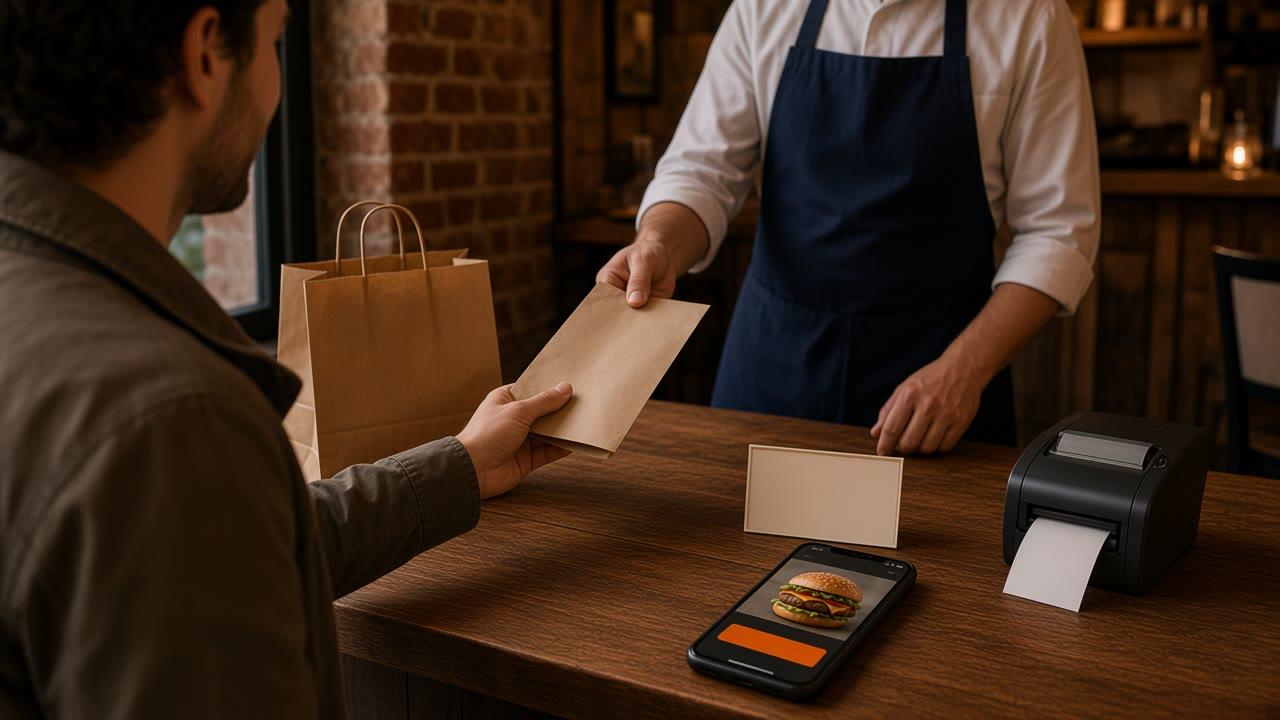
A secret menu is the plate a regular already knows how to ask for, plus the short special you only tell people who eat with you. The cook can fire it. The guest feels like they were let in on it. The order still has to land somewhere you can see, price, and print.
A plate that disappears on a date is what is LTO food. A longer list of named offers is restaurant specials ideas. A takeaway counter that lives on pickup is the online ordering system for takeaway. How a note reaches people who already ordered is restaurant SMS and email marketing. Points on those orders are loyalty and rewards. Stay here for the off-menu habit.
What a secret menu is at an independent restaurant
It is not a second menu with a lock on it. It is three ordinary moves. A staff favorite the line already makes when someone asks. A limited item you add for a short window, then take down. A sentence at the counter, in a text, or in an email that tells the people who would actually order it.
The feeling sells the next visit only if the plate is real and the price is the same on the phone, at the window, and on your site.
Staff favorites and off-menu asks
Start with food you already prep. The burger the cooks eat after close, or the side that never made the printed card. If the line cannot fire it beside the regular menu on a Friday, it is not a secret menu item. It is a new station.
Write the name the way the cook says it. "Ask for the smash" is a story. "Smash burger, American, pickles, $14, through Sunday" is an item. Put that sentence in the description so a guest who heard it from a friend can still check out without calling you to translate.
A short window, not a standing discount
A secret menu works when it ends. A weeknight plate, a holiday run, or a dozen portions is a reason to come back this week. A standing percent off the whole menu trains people to wait. Name the plate, post one dollar amount, and write the last service.
When that service is over, take the item down. Ordering already opens and closes with the hours you post on online ordering. Hours do not know that Thursday was the last Thursday for this plate. A person still removes it.
Why a secret menu brings people back to you
The buzz is the telling. A regular mentions it. A text names it. Someone who has not been in for two weeks has a reason that is not "we miss you" with nothing to order. The repeat is the button on your domain, where the account, the saved order, and the points live.
DoorDash, Uber Eats, and Grubhub often charge 15 to 30% of the sale. A guest who already knows your name should buy the plate on your site. The percentage on a MicroSky Food plan applies to online orders. MicroSky Food takes no percentage of in-store sales.
Tell the people who already order from you
The list is guests who already ordered on your storefront. Customer accounts and that list are on every plan, and online ordering says the list stays yours. Sending the email or the text is the next step, and it is not on day one of Standard.
Email and SMS campaigns to that list are on Growth Plus, at $999 per month plus 10% of net sales on online orders, after 3 months on Standard. That plan also includes segmentation and marketing campaign analytics. The path is marketing and restaurant SMS and email marketing.
What the note should say
One plate. The price. The last day. The link to your menu. Lunch can hear about lunch if you are on Growth Plus and you segment. Do not buy a file of strangers, and do not send a second note because the first one felt quiet. A sent message is not a meal.
On Standard, put the item on the site and say it at the counter. Growth, after 3 months on Standard, can push to the branded iOS app. There is no published Android app. The text and the email wait for Growth Plus.
Put the secret menu item on the menu you already run
In restaurant admin you add a special, set the price, and the storefront updates. The same save takes it off. Change a price or 86 the item when the pan is empty, and the site updates. There is no separate secret-menu builder, and there is no password.
Anyone with the link can order the item while it is published. That is the point of a direct order. If the plate is only for people you already told, keep the window short and 86 it when the window ends. Do not leave a public button up after you have stopped cooking it.
Modifiers the kitchen already asks
A real choice belongs on the item: temperature, a sauce, half and half, or a side that costs more. Those are modifiers, with a price when the choice costs more. The cart on online ordering shows a running subtotal. There is no bundle builder. Use the words on the rail.
Read the ticket before you tell anyone
Click a storefront first on the live demo, then place one paid test and read the print. The ticket should show the item, each choice on its own line, and a name. Orders move from new to preparing to ready. A $500 one-time hardware package includes a mini PC print server and a receipt printer, or use a receipt printer you already have.
Give the person on the pass a staff login that can 86 the item. How it works is where that login is set up.
Reward the regular who keeps coming back
Loyalty points accrue on storefront purchases on every plan, and you set the reward. A guest who creates an account at checkout keeps the points from that order. Saved orders make the next visit shorter. The guest rewards lookup in admin answers "how close am I" without a stamp card.
A coupon can skip categories you do not want discounted. That is a reward you configure. Checkout does not ask for a birthday, and the platform does not add birthday points on its own. Points do not build on a marketplace receipt. Detail is in loyalty and rewards.
Run one secret menu item this week
Pick one plate the line already fires. Write the name, the dollar price, and the last service. Add it in restaurant admin. Tell the people at the counter in one sentence. If you are on Growth Plus, send one email and one text to guests who already ordered, with the same sentence and the link.
A takeaway counter can use the same habit on collection orders. Pickup shows a ready time before the guest pays. That rush is the online ordering system for takeaway.
- One plate the kitchen can fire beside the regular menu.
- One dollar amount, written the same way at the counter and on the site.
- A last service in the description, and a person who 86s it.
- A note only to people who already order from you, and only on a plan that includes it.
- One paid test, then a ticket you can read.
What it costs to sell that item on your site
On pricing, Standard is $249 per month plus 5% of net sales on online orders, or $499 per month flat. Only that flat Standard option leaves off the percentage. Growth is $499 per month plus 7% of net sales on online orders. Growth Plus is $999 per month plus 10% of net sales on online orders, after 3 months on Standard. A 30-day free trial does not replace those 3 months.
The percentage applies to online orders. Cards run through Stripe, Authorize.net, or Electronic Payments. Apple Pay is on Growth and Growth Plus, through Authorize.net. There is no long-term contract. Social, email, and text are on Growth Plus only.
What a secret menu will not do
It will not hide a menu from the public, lock an item behind a password, or mark a guest as a member. It will not invent demand for a plate the line cannot cook. It will not dispatch drivers or draw a geofence. Delivery stays the zone, the radius, and the fee you set.
Restaurants already on the platform are on the clients page. Questions go through contact. Start 30 Day Free Trial. Call (888) 960-1359.