
Restaurant specials ideas are only useful if the kitchen can fire them and a guest can pay for them. A clever name on a chalkboard does not print a ticket. These 30 offers are sorted by daypart, then by season: breakfast through late night, then winter, spring, summer, and fall.
Ideas for specials for a restaurant start with food you already cook. Each one is a named item with a price and a stop, not a percent off the whole menu. Feature it on your ordering site, then tell people who already order from you. How to write a limited offer and take it down is what is LTO food. Holiday dates live on Halloween restaurant special offers and November food holidays.
Turn the idea into a button before you promote it
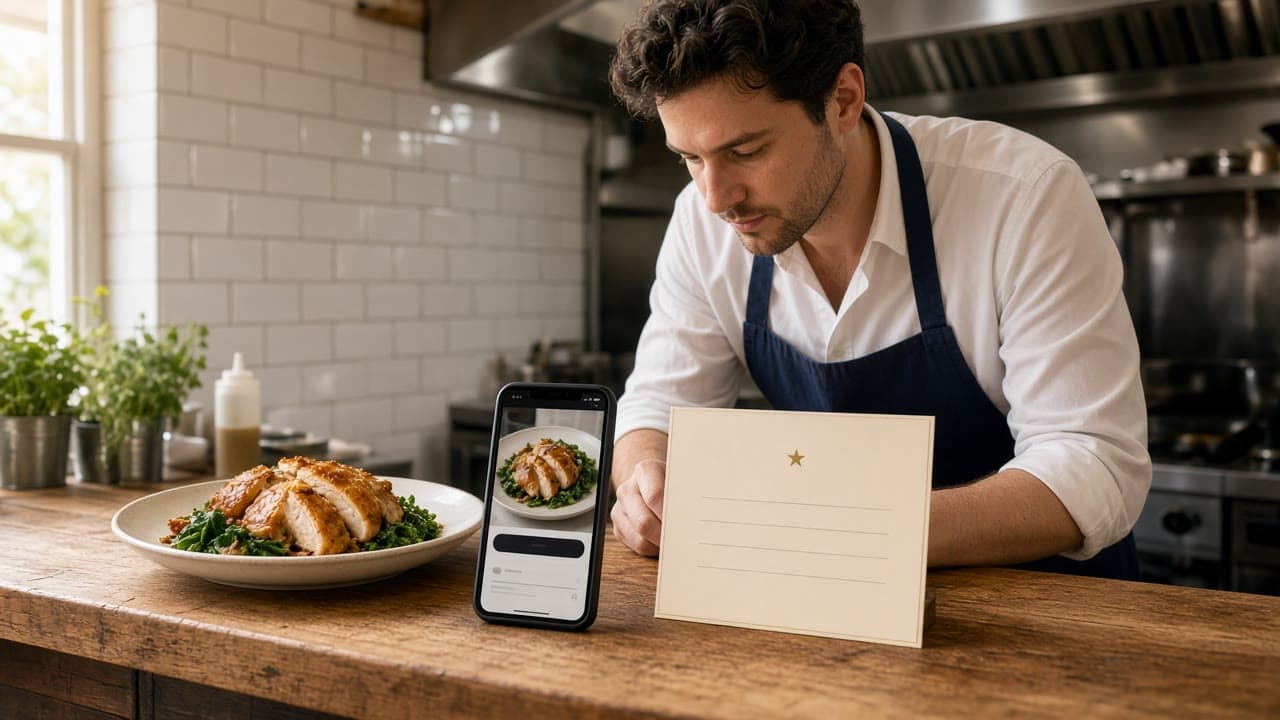
In restaurant admin you add a special, set the price, and the storefront updates. Use a photo of the real plate, a short description, and the last day in that description. Keep modifiers to the questions the counter already asks. A special with eight new choices is a new menu wearing a star.
Say whether pickup, delivery, or both can take it. If the dish will not survive a car, leave it off delivery. There is no separate coupon calendar. Ordering opens and closes with your posted hours, and you can hide a category when its hours end. A single item on the regular menu stays up until someone removes it or marks it unavailable. Name that person at lineup.
Breakfast specials
Publish only what the breakfast station can fire before the cutoff you wrote down. Put the group in its own category and take it down when breakfast ends.
- Egg sandwich and coffee before 10 a.m., with the cutoff in the description.
- Weekend brunch plate for two, one price, only while that station is staffed.
- Pastry and a hot drink for the commute, photographed as the pair.
- Breakfast burrito that uses peppers or potatoes you would otherwise hold.
- Short pancake stack on Saturday only if the griddle can keep up.
- Warm grain bowl on a cold weekday, with one add-on you already portion.
Lunch specials
Lunch is a clock. One named combo beats a lunch menu as long as dinner. Tell the list late morning, not at 4 p.m., and only on a plan that includes that channel.
- Named lunch combo with a drink, in a category that comes off when lunch ends.
- Half sandwich and soup, cut from bread you slice anyway.
- Office pickup tray of a dish the line already fires, with the portion count written down.
- One express item with no new modifiers, for a guest with about twenty minutes.
- Weekday salad in a box you already use, left off delivery if it will not travel.
- Slice, taco, or other handheld you can fire without a new station.
Afternoon specials
Use the slow hour for a drink, a dessert, or a side you are already holding. Do not invent an entree for a room that is empty.
- Coffee and a cookie, listed only in the hour that is actually quiet.
- One dessert you already make, on between lunch and dinner, then off.
- Shift-meal plate for nearby workers, one plate and one price.
- Side-item snack box, such as fries or a small salad.
Dinner specials
Use a station that is already hot. Write the last seating. If the pan is empty at 7 p.m., mark the item unavailable at 7 p.m.
- Family bundle of two mains you already sell and one side, one price.
- Weeknight plate at a set price, a different protein on the same station.
- Starter plus main for two, only when someone can fire the starter.
- Pasta, grain, or rice that changes with what you bought. Name the ingredient.
- Protein from a cut you can cook tonight, removed when the pan is empty.
- Shareable appetizer sized for a real table, not a platter you cannot refill.
Late night specials
A late offer is honest only if you are open and the oven is still on. After close, guests should see that you are closed.
- Dessert listed after the dining room slows, removed when it is gone.
- Game-night shareable only on nights you are staffed for a bump.
- Last-hour sandwich from prep you will not hold overnight.
- Slice or handheld after 9 p.m. only if that oven is still on.
Seasonal specials
Season is a reason to cook an ingredient you can get this month, not a costume on February food. Take the item off when the ingredient is gone.
- Winter: chili, soup, or a hot sandwich you already know how to hold.
- Spring: a lighter grain or salad that uses produce you can get now.
- Summer: a cold box that survives a car, plus a grill plate only if you grill.
- Fall: a roasted plate or a game-day shareable, tied to a real date on the November calendar.
Feature each special on your ordering site
The button is the promotion. Put the special first in a short category, in the words you use at the window. If the cling says brisket melt this week, the button should not say seasonal feature three. Online ordering is where that menu lives. Move the category back when the week ends. How many standing items deserve a button is small restaurant menu. Layout is restaurant website design. The cart itself is online ordering menu.
Keep the reorder on your domain. DoorDash, Uber Eats, and Grubhub often charge 15 to 30% of the sale. Do not hide the special price only inside their apps. The Google Business Profile order link should open your site. Orders placed now, with a live cart and a ticket that prints, are on demand food delivery platform.
Push the offer by SMS or email
Use one sentence everywhere: the dish, the price, the last day, and the link. Email and SMS to guests who already order from you are on Growth Plus, at $999 per month plus 10% of net sales, after 3 months on Standard. Standard and Growth do not include those campaigns. Push to a branded iOS app is on Growth, at $499 per month plus 7% of net sales, after the same 3 months. Send breakfast before the window, lunch late morning, and a short-run dinner that afternoon. A daily ping becomes noise.
If you are not on that plan, the window, the counter, and the item on the site are still the offer. Do not skip the plate because you cannot text, and do not text a personal list you cannot stop. Which channel fits a normal week is mobile marketing for restaurants.
A week to run one special
On day one, name the plate, the dollar price, and the last service. Cross it off if the station cannot fire it beside the usual orders. On day two, add the item, the photo, and the last day. On day three, pay for a test order and read the print. Tell the counter the sentence before you tell guests. On the last day, remove the item before close. If it sold out at noon, mark it unavailable at noon. Check the page from a phone that is not logged into admin.
What a list of specials will not fix
Thirty ideas will not repair a menu that is already too long, a wrong price on the standing items, or a checkout people abandon. They will not dispatch drivers, track a car, or draw a fence around the block. Delivery stays the zone, radius, and fee you configure. MicroSky Food does not offer driver dispatch, driver tracking, or geofencing. If nobody can add the item and take it down, the offer is a poster.
On Standard, choose $249 per month plus 5% of net sales, or $499 per month flat. Growth is $499 per month plus 7% of net sales. Growth Plus is $999 per month plus 10% of net sales, after 3 months on Standard. Hardware, if you need a print path, is a $500 one-time package: a mini PC print server and a receipt printer. Every plan starts with a 30-day free trial, and there is no long-term contract. Bring Stripe, Authorize.net, or Electronic Payments. Apple Pay is available on Growth and Growth Plus plans, through Authorize.net. Plan math is on pricing. Setup is on how it works. Restaurants already on the platform are on clients. Questions go through contact. See a menu on a phone in the live demo. Start 30 Day Free Trial. Call (888) 960-1359.