
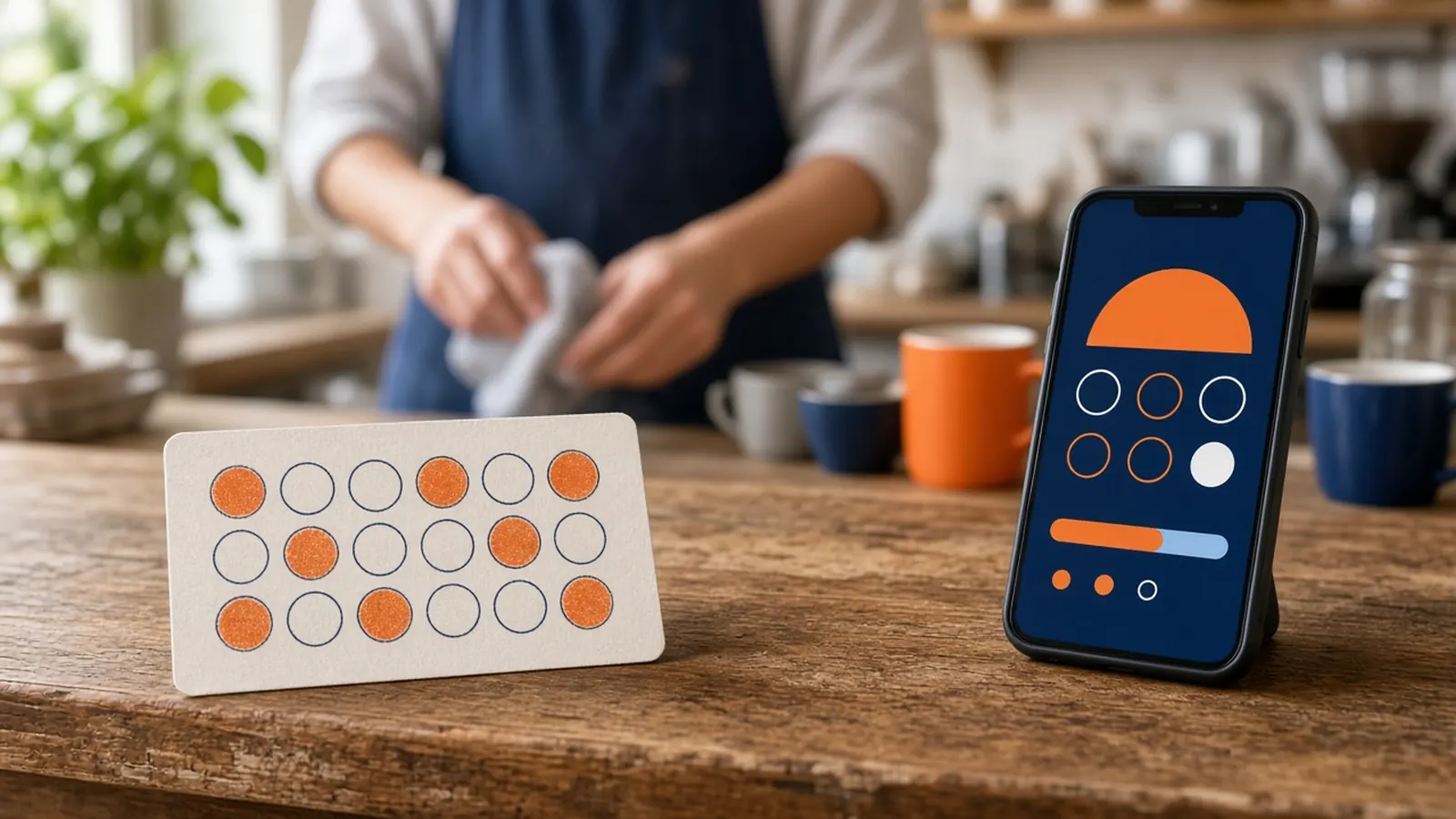
What the paper card is actually doing
A restaurant loyalty card is a small contract. The guest carries it, you mark it, and a later visit is partly on the house. At a counter where the same faces appear, that contract is easy to see. The drawer, the stamp, and the regular's name are all in one place. The program feels fair because both sides can watch it.
The contract breaks when the order leaves the counter. A pickup guest pays in the car. A delivery guest is already home. A closer on a new shift does not know that this person is one visit from a free item. You either comp from memory or you do not, and the regular notices the difference. The card did not fail as an idea. It failed as a record.
Owners usually keep the card too long because it feels cheaper than software. The cost shows up as missed comps, awkward arguments, and a guest list you cannot see. You know your Tuesday regulars by face. You do not know which of them ordered twice last month and then stopped.
What to keep when you switch
Keep the promise people already understand. If the card said a free slice after a set of visits, do not replace it with a point system nobody can do in their head. Write one sentence a cashier can say without a script book: order on our site, the points land on the account, and this reward is what they buy.
Keep the counter habit for guests who will never make an account. A paper restaurant loyalty card can still live in the drawer for walk-up coffee or a slice at the rail. Tell the staff which guests that is for. Everyone else gets pointed at the site, because that is where the order, the payment, and the reward can share one record.
Keep the reward scarce enough that the kitchen can afford it. A free item should be something you already prep, not a special that needs a new station. The point of the switch is a cleaner record, not a richer giveaway.
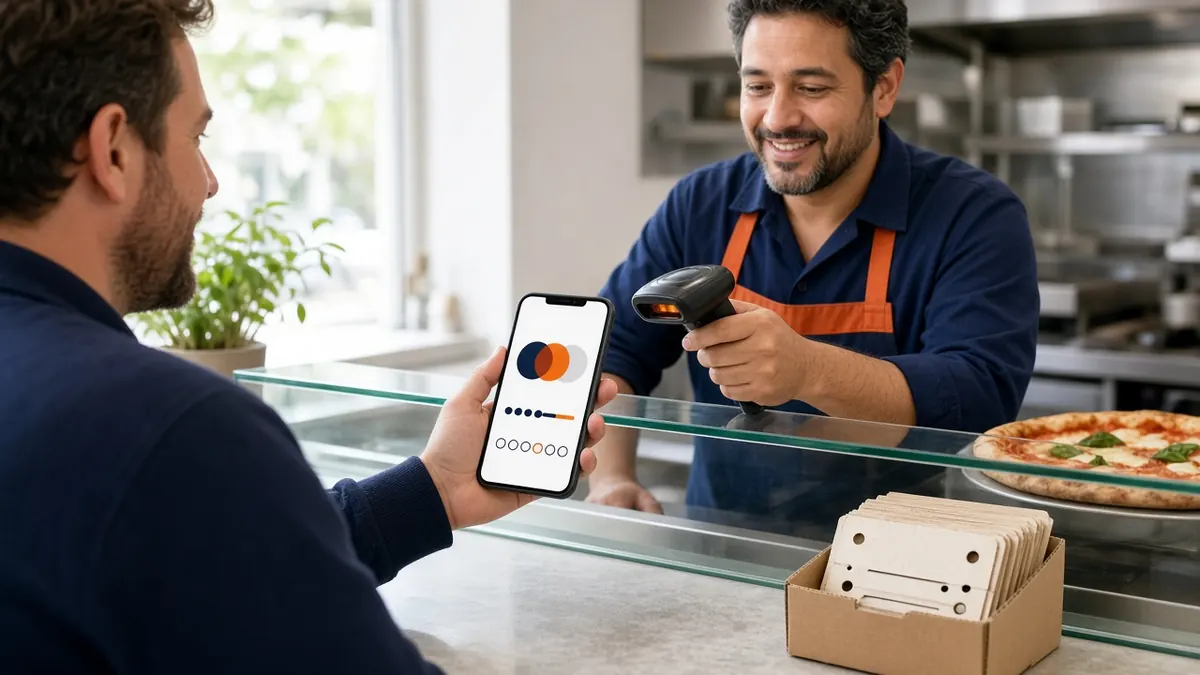
What to drop
Drop the second stamp for guests who already ordered online. Double-dipping teaches people that the website is optional. If the reward only counts on your site, the site becomes the habit. If it counts everywhere, the site is a brochure.
Drop expired-card arguments. Paper programs collect a shoebox of half-finished cards, cards from a promotion you ended, and cards from a cashier who stamped too generously. When you move, pick a clean start date. Honor cards that are close to a reward. Retire the rest with a short window, and say the date out loud.
Drop any reward you cannot explain on a receipt. If the cashier cannot answer how close the guest is, the program is already too clever. Digital points do not fix a confusing offer. They only store it.
- One reward sentence, not a ladder of tiers you have not staffed.
- A start date, and a two-week window for old cards that are nearly full.
- Rewards that pay only on your own ordering site.
- A box stamp or window sign with the order link.
- A manager who can look up the account when a regular asks.
How to move regulars without a speech
Week one is the menu and a test order, not a marketing campaign. Put the site on the Google Business Profile order link, on the box, and in the bio. Staff need a sentence, not a pitch: the fastest reorder is the one you already saved. How it works is the setup path. The loyalty switch is the conversation after the first real ticket prints.
Week two is names you already know. When a regular reaches for a wallet card, take the order on your site with them standing there if they are willing. Show the account, show the saved order, and tell them the old card still counts until the date you posted. People trust a program they watched you enter.
Week three is the guests who forgot. Do not scold them. Ring the order, mention the date, and let the paper card expire on the day you named. The guests who wanted the reward will have an account. The guests who only wanted a discount on a marketplace app were never your card program.
A Tuesday you can run without a committee
Once a week, look at who reordered and who went quiet. You do not need a dashboard full of rates. You need a short list: accounts that used to order weekly and did not. On Growth Plus, that list can receive an email or a text. On Standard, you still have the accounts, and a phone call from the owner still works for a small room.
Check the reward itself the same day. If everyone hits it on the first week, it is too easy and the food cost will show up in the invoice pile. If nobody hits it after a month, the sentence at the counter is wrong or the reward is dull. Change the reward, not the whole program.
Leave the paper restaurant loyalty card in the drawer for the handful of guests who want it, and stop designing the business around them. The record that matters is the one attached to a paid order on your domain.