

Two kinds of dining rewards programs
One kind is a guest product. A card, a bank, or an app pays the diner a perk for spending in a category called dining. The restaurant is a merchant in that category. You may see a new name once. You rarely see them again unless the network sends them, and the network decides the terms.
The other kind is yours. The guest gets something for coming back to this room, this pizza, this lunch counter. You choose the reward, you see the account, and the next order does not have to pass through a club you do not control. Independent restaurants almost always need the second kind more than the first.
The confusion is the search itself. People looking up dining rewards programs are often choosing a personal card. If you publish a list of bank perks, you are writing for diners and teaching nothing to the person who pays the invoice. Aim the decision at the owner: whose list is the guest on after the meal?
What a shared network actually trades
A shared network offers distribution. In exchange it usually wants a fee, a listing, a booking rule, or a reward you fund. Sometimes all four. The flattering version is that you are being featured. The operating version is that the guest learns to open that app when they are hungry, and your name is one tile.
Ask three questions before you sign. Can you export the guest's contact if you leave? Does the reward pay when they order on your site, or only inside the network? What happens to a regular who already loves you and now gets a better deal if they arrive through the other door? If the answers are fuzzy, you are funding someone else's dining club.
None of this says every partnership is a mistake. A hotel concierge list or a neighborhood office that sends lunch can be worth a simple offer. Keep it as a promotion with an end date. Do not make it the only way a guest can earn a reward.
Build the version you can explain at the door
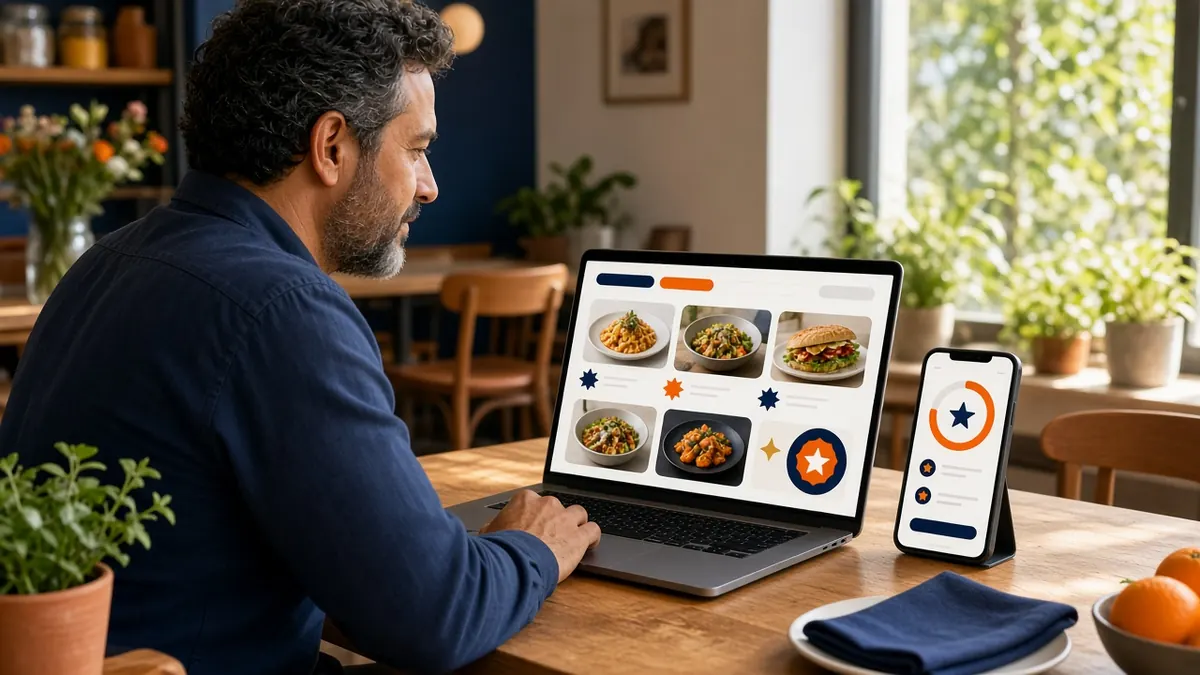
Your program needs a home, a rule, and a person who can look it up. The home is your ordering site, on your domain, with your photos. The rule is points on those orders and a reward you set. The person is whoever is on the counter tonight, plus the admin login, not a binder in the office.
Write the rule the way you would say it while boxing a meal. Order here, points land on the account, this is what they are worth. If you need a chart, the rule is not ready. Dining rewards programs that need a chart get abandoned by the dinner rush, even when the software is fine.
Put the same link everywhere the guest already looks: the Google Business Profile order link, the box, the receipt, the bio. A reward nobody can find is a rumor. How it works covers standing the storefront up. The reward is a setting on that storefront, not a second project.
- Reward only orders on your site, so the habit has one door.
- Use an item you already sell, with a cost you already know.
- Give the counter one sentence and the manager the admin login.
- Review the reward monthly, not during a Saturday rush.
- Keep shared-network deals on a calendar with an end date.
Who this is for, and who should skip it
Build your own program if regulars are a real share of the week and you can name them. A pizza shop with Friday names, a cafe with a morning line, a dining room with a Thursday two-top that always gets the same entrees. Those guests are deciding, every week, which app opens first.
Skip a complicated program if you are still changing the menu every other day or you cannot staff a consistent counter script. Get the order path boring first. A reward on top of a broken reorder is just a discount.
If you do join a network, keep your own accounts anyway. The network can introduce a stranger. Your site should be where that stranger becomes a regular. Dining rewards programs run by someone else end when the contract ends. The account on your domain does not have to.
A simple owner test
Pick ten guests you would be sorry to lose. Ask where they placed the last order. If the honest answer is a marketplace, a delivery app, or a card perk that is not your site, your dining rewards programs are living in the wrong place. The fix is not a louder poster. It is a reason to use your URL that the guest can feel on the next order.
That reason can be speed. Saved orders and reorder exist so the second meal is shorter than the first. Points are the extra reason to bother making the account. Use both. Speed gets the account created. The reward gets it used again.
Then leave it alone for a month, except for the weekly look at who went quiet. Changing the reward every weekend trains staff to shrug when a guest asks. Consistency is the part guests can trust.